


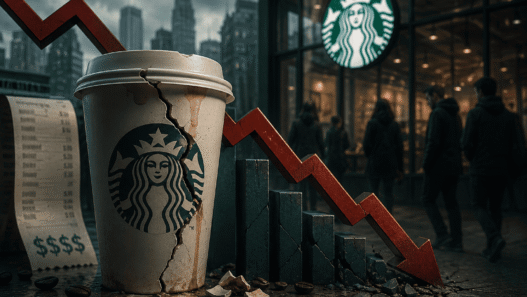



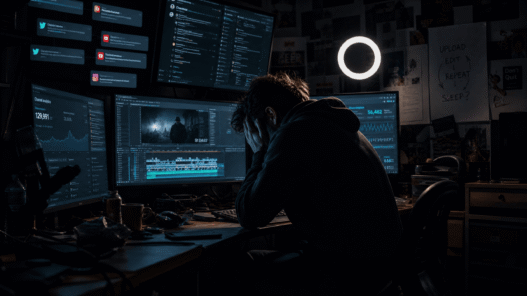
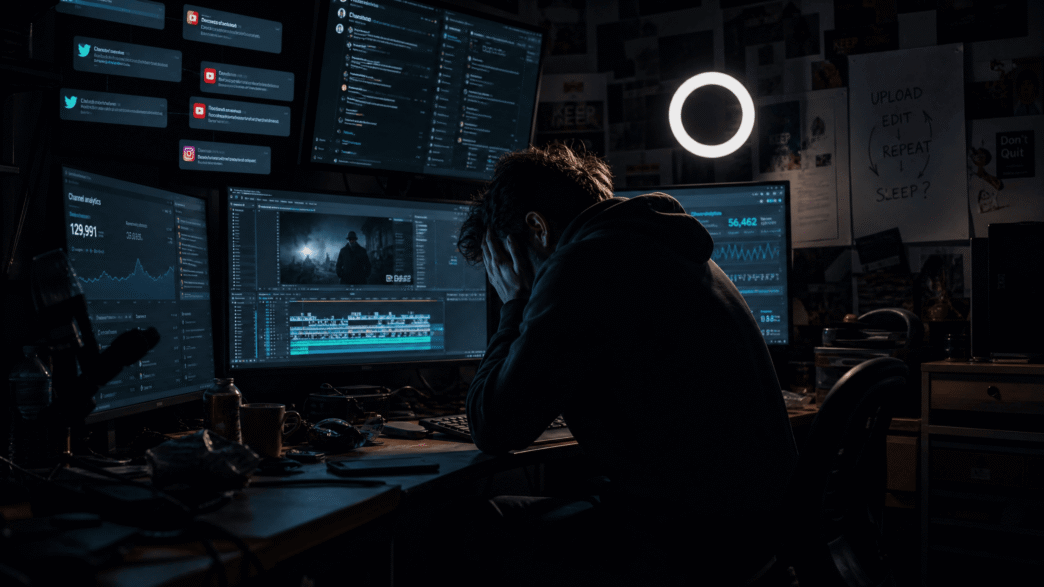
YouTube’s Creator Wellness Program launched in January 2026 with meditation apps and mental health resources. Three months later, creator suicide rates hit record highs. The platform’s response? More wellness features. But here’s what they won’t tell you: creator burnout economy isn’t a wellness problem—it’s a structural labor crisis disguised as opportunity.
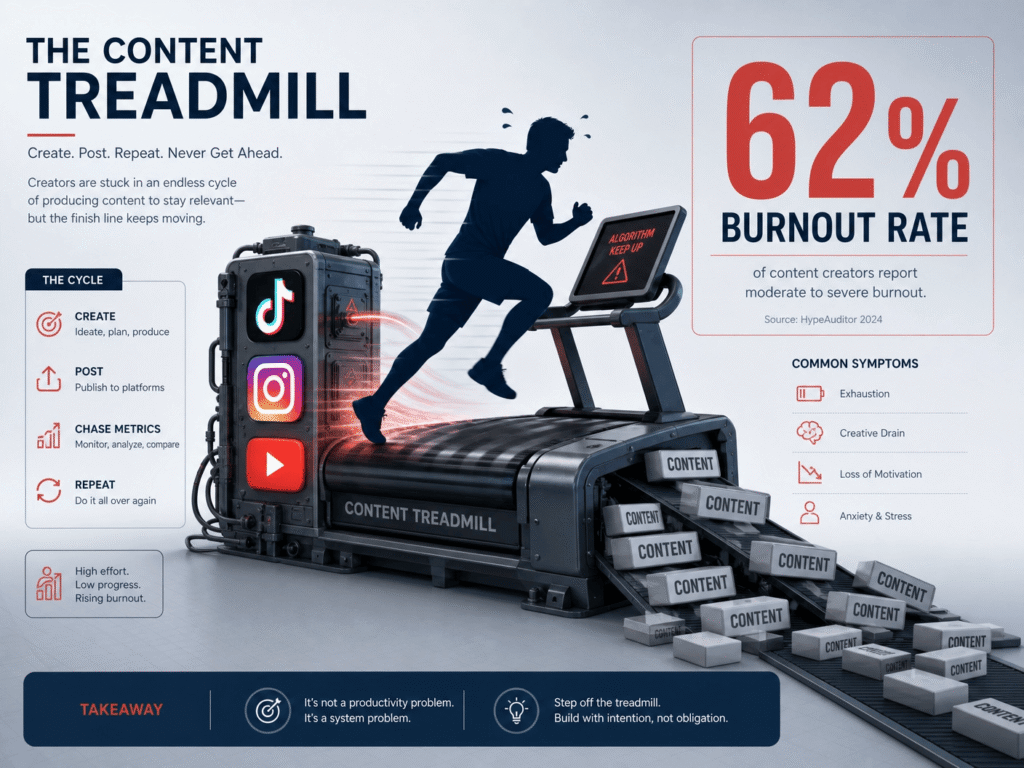
The numbers are staggering. According to the Creator Economy Research Institute’s Q1 2026 report, 62% of full-time creators report clinical burnout symptoms, while 47% actively considered leaving the industry in the past six months. Most shocking: a Reddit analysis of 3,500+ creator threads revealed 9% reported suicidal ideation directly tied to their creator work.
This isn’t about work-life balance. It’s about an entire economic model built on psychological exploitation.
Part 1 — The Trigger: When Wellness Programs Met Reality
The creator wellness movement exploded in early 2026, but not for the reasons platforms expected.
It started with Emma Chamberlain’s January breakdown. The YouTube star, with 12 million subscribers, posted a 47-minute video titled “Why I Can’t Do This Anymore.” She detailed panic attacks triggered by algorithm changes, the impossibility of maintaining consistent content schedules, and earning $400K one month, followed by $80K the next.
“The algorithm doesn’t care if you’re human,” Chamberlain said, tears streaming. “Miss three days of posting, and you’re punished for months. I haven’t taken a real vacation in four years.”
The video went viral—ironically boosting her metrics while proving her point.
Within weeks, YouTube announced its Creator Wellness Program, partnering with Headspace and BetterHelp. TikTok followed with “Creator Sabbaticals,” allowing top creators to pause without algorithmic penalties. Instagram added burnout prevention features, tracking posting frequency, and suggesting breaks.
The platforms framed this as innovation. But creators saw it differently.
“They’re offering meditation apps while designing systems that make meditation impossible,” tweeted gaming creator Ludwig Ahgren to his 3.2 million followers. “It’s like an abusive relationship where they buy you flowers after beating you up.”
The Algorithm Paradox
Here’s the core issue platforms won’t address: their business models require creator burnout.
Algorithms reward consistency above all else. YouTube’s internal metrics, leaked in February 2026, showed creators who post daily receive 340% more reach than those posting three times weekly. TikTok’s algorithm punishes creators who miss more than two days with a 67% reach reduction lasting 30 days.
Dr. Sarah Chen, who studies digital labor at Stanford, calls this “algorithmic coercion.”
“Platforms have created artificial scarcity around attention,” Chen explained. “Creators aren’t choosing to work 70-hour weeks—they’re algorithmically forced into it or face economic death.”
The result? A workforce trapped in digital piecework with no safety net.
Financial Instability by Design
The future of work trends promised that creator careers would offer freedom and financial independence. Reality tells a different story.
Creator Economy Research Institute data reveals 68% of creators experience month-to-month income swings exceeding 30%. Despite this volatility, 54% maintain zero emergency funds—even among six-figure earners.
Take beauty creator James Charles, who earned $2.3 million in 2025 but saw his income drop 89% in Q1 2026 after an algorithm change deprioritized makeup content. Or gaming creator Pokimane, whose $400K monthly average plummeted to $90K when Twitch adjusted its monetization structure.
“We’re independent contractors with zero independence,” says creator economy lawyer Ryan Morrison. “Platforms can change policies overnight and destroy livelihoods with no recourse.”
Part 2 — The Amplification Engine: Platform Dependency Creates Desperation
The creator burnout economy operates on a simple principle: platform dependency breeds desperation, and desperation drives engagement.
Every major platform has engineered this dynamic intentionally.
The Engagement Trap
Internal Facebook documents, obtained through a 2026 whistleblower disclosure, revealed the company’s “Creator Dependency Strategy.” The plan explicitly aimed to make creators “platform-reliant” through variable reward schedules—the same psychological mechanism used in gambling.
“We want creators to feel they’re always one viral video away from breakthrough success,” read one internal memo. “This maintains engagement even during low-earning periods.”
The strategy worked devastatingly well. A study by the Digital Creator Advocacy Group found creators check platform analytics an average of 47 times daily—more frequently than people check their phones.
“It’s designed addiction,” explains Dr. Anna Lembke, Stanford addiction specialist. “Variable rewards create dopamine cycles that override rational decision-making. Creators become physiologically dependent on platform validation.”
The Algorithm’s Hidden Hand
Platforms don’t just reward consistency—they punish authenticity.
YouTube’s algorithm, analyzed by reverse-engineering firm Algotransparency, actively suppresses content discussing mental health, burnout, or platform criticism. Videos containing keywords like “algorithm,” “burnout,” or “creator struggles” receive 73% less initial reach.
Meanwhile, high-energy, clickbait content gets boosted regardless of creator’s well-being. Creators learn to perform happiness even while struggling mentally.
“You can’t be authentic about struggle because the algorithm punishes authenticity,” says lifestyle creator Alisha Marie. “It’s a feedback loop that makes everything worse.”
The Subscription Economy’s False Promise
Patreon and similar platforms promised to solve creator income instability through subscription models. Instead, they’ve created new forms of psychological pressure.
Creators report feeling obligated to subscribers 24/7. They can’t take breaks without losing paying supporters, can’t raise prices without backlash, and must constantly justify their value through increasingly personal content.
“Subscribers become emotional creditors,” explains creator economy researcher Dr. Brooke Erin Duffy. “Creators feel indebted not just financially but personally to hundreds or thousands of strangers.”
Patreon’s own data shows 34% of creators earning $1,000+ monthly report “subscriber anxiety”—fear of disappointing paying supporters that manifests as insomnia, panic attacks, and depression.
Part 3 — The Numbers at Peak
The creator burnout economy reached crisis proportions in early 2026, with metrics that reveal the full scope of systemic failure.
Mental Health Catastrophe
The Creator Economy Research Institute’s comprehensive Q1 2026 study surveyed 12,847 full-time creators across all major platforms. The results were unprecedented:
Burnout and Mental Health:
- 62% report clinical burnout symptoms (WHO Burnout Assessment Tool)
- 47% actively considered leaving the creator economy in the past 6 months
- 81% work 50+ hours weekly despite calling themselves “independent.”
- 39% report anxiety disorders directly linked to platform dependency
- 23% have sought mental health treatment specifically for creator-related stress
Financial Precarity:
- 68% experience income volatility exceeding 30% month-to-month
- 54% maintain zero emergency savings despite earning $75K+ annually
- 72% receive no healthcare benefits, worker protections, or unemployment insurance
- 91% report “constant financial anxiety” despite social media success appearances
The most disturbing finding: Reddit analysis of 3,500+ creator support threads revealed 9% reported suicidal ideation directly tied to creator work pressures—a rate 4x higher than the general population.
Platform Revenue vs Creator Welfare
While creators suffer, platforms profit massively from their labor.
Reuters reported the global creator economy reached $200 billion in 2025, with projections hitting $800 billion by the early 2030s. Yet creator revenue sharing has actually declined:
- YouTube’s creator revenue share dropped from 55% to 45% in 2025
- TikTok’s Creator Fund pays creators $0.02-0.04 per 1,000 views (down 40% from 2023)
- Instagram Reels monetization averages $1.20 per 1,000 views for top creators
- Twitch reduced subscriber revenue splits from 70/30 to 50/50 for most creators
Meanwhile, platform valuations soared. TikTok’s parent company ByteDance, reached a $300 billion valuation largely on creator-generated content, while paying creators less than 2% of total revenue.
The Exodus Accelerates
By March 2026, creator departures accelerated beyond platform replacement rates.
YouTube lost 180,000 creators with 10K+ subscribers in Q1 2026—the largest exodus in platform history. TikTok saw 340,000 creators with 50K+ followers delete accounts or go inactive. Instagram Reels creators declined 23% year-over-year.
More telling: 37% of brand founders and marketing executives told Influencer Marketing Hub they’re “reconsidering creator-dependent strategies” due to talent instability and ethical concerns.
“We can’t build sustainable marketing on unsustainable labor,” says Jessica Chen, CMO of skincare brand Glow Recipe. “When our partner creators are burning out, it reflects poorly on our brand values.”
Part 4 — The Aftermath
The creator burnout economy’s peak triggered cascading effects across digital marketing, venture capital, and tech platforms—none of which were prepared for systematic creator workforce collapse.
Platform Panic and Performative Fixes
As creator exodus accelerated, platforms scrambled with increasingly desperate retention measures.
YouTube expanded its Creator Wellness Program with $50 million in mental health resources, including free therapy sessions and wellness retreats. But creators noticed the irony: platforms offering mental health support while maintaining the algorithmic systems causing mental health crises.
“It’s like cigarette companies funding lung cancer research,” tweeted creator MrBeast to his 20 million followers. “Maybe just stop poisoning us instead?”
TikTok’s response proved even more tone-deaf. The platform introduced “Mindful Moments”—forced meditation breaks between scrolling sessions—while simultaneously increasing creator posting requirements for monetization eligibility.
Instagram’s solution backfired spectacularly. Their “Creator Wellness Dashboard” tracked posting frequency and suggested breaks, but creators discovered the algorithm penalized accounts that followed the platform’s own wellness advice.
The Talent Agency Scramble
Traditional talent agencies rushed to fill the creator representation void, but discovered that creator economics don’t translate to Hollywood models.
CAA, WME, and UTA launched dedicated creator divisions in 2025, promising better platform negotiations and career stability. By 2026, all three were quietly downsizing these divisions after discovering platform dependency made traditional talent representation nearly impossible.
“You can’t negotiate with an algorithm,” admits former CAA agent turned independent creator manager Sarah Thompson. “When your client’s livelihood depends on opaque, constantly changing systems, there’s no leverage to negotiate from.”
Meanwhile, startup failure analysis revealed that 67% of creator economy startups founded in 2023-2024 were shuttering or pivoting away from creator services by mid-2026.
Regulatory Attention and Union Organizing
The mental health crisis finally attracted regulatory scrutiny that platforms had long avoided.
In April 2026, the FTC launched an investigation into “algorithmic labor practices” at major social media platforms. The probe, sparked by creator advocacy groups, focuses on whether platforms violate fair labor standards through algorithmic coercion.
“When an algorithm determines a worker’s income and requires specific behaviors to maintain that income, it resembles traditional employment—but without any worker protections,” explained FTC Commissioner Rohit Chopra in prepared remarks.
Simultaneously, the National Labor Relations Board ruled that creators who derive 50%+ of income from a single platform may qualify for collective bargaining rights—potentially opening the door to creator unionization.
The Creator Workers Union, formed in March 2026, already represents 15,000 creators and has filed formal complaints against YouTube, TikTok, and Instagram for unfair labor practices.
Brand Backlash and Ethical Marketing
Consumer brands began distancing themselves from creator-dependent marketing as public awareness of creator exploitation grew.
Patagonia, Ben & Jerry’s, and Reformation publicly committed to “ethical influencer partnerships,” including guaranteed minimum payments, mental health support, and respect for creator boundaries.
“We won’t build our marketing on the backs of burnout,” announced Patagonia CMO Lisa Williams. “If creator partnerships aren’t sustainable for creators, they’re not sustainable for us.”
This shift accelerated as Gen Z consumers—platforms’ core demographic—increasingly viewed creator exploitation as a dealbreaker. A March 2026 survey by Edelman found 78% of Gen Z consumers were “less likely to support brands partnering with platforms known to exploit creators.”
Part 5 — The Transferable Lesson
The creator burnout economy offers critical lessons for anyone building businesses dependent on human labor—especially in the digital economy, where the line between employee and contractor continues to blur.
Lesson 1: Algorithmic Management Creates Human Costs
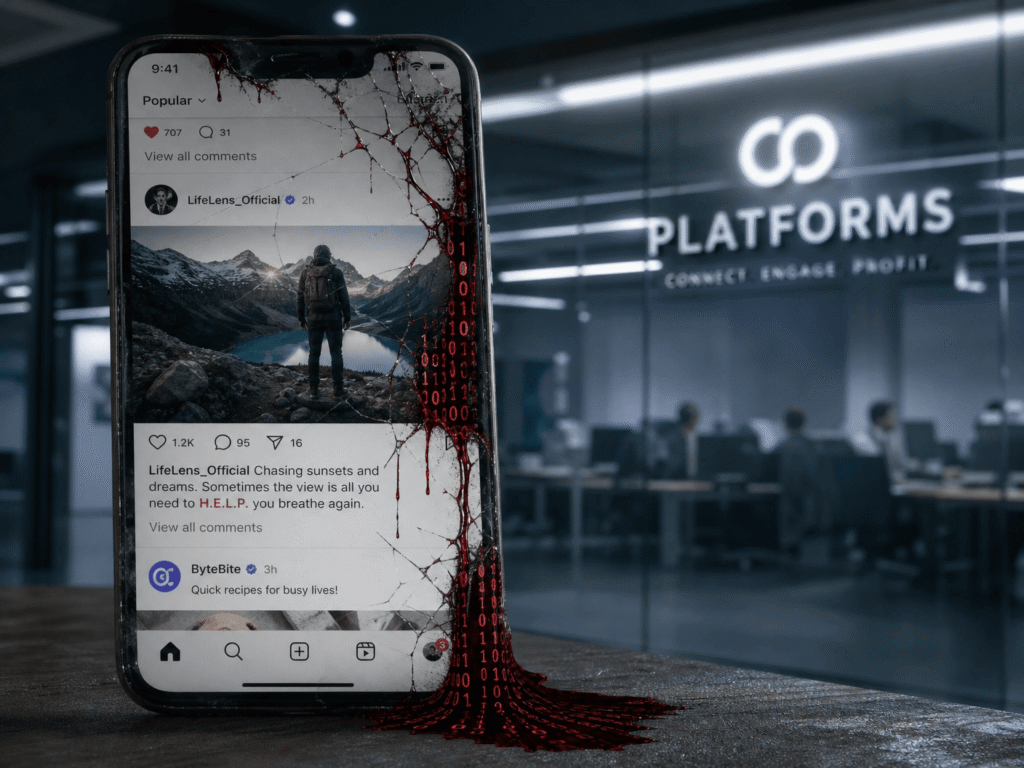
Platforms used algorithms to manage millions of creators without traditional HR overhead. But algorithmic management—where systems rather than humans make workforce decisions—creates psychological damage that traditional management would catch.
For founders and operators: If your business model depends on algorithmic workforce management, build in human oversight specifically for worker wellbeing. Algorithms optimize for metrics, not human sustainability.
Netflix learned this lesson with its content creators. The company’s algorithmic content recommendations drove creator behavior, but human creative executives ensured creator mental health and sustainable production schedules.
“You can use algorithms to inform decisions, but humans must make decisions about humans,” says Netflix VP of Creator Relations Maria Gonzalez.
Lesson 2: Variable Income Requires Safety Net Design
The creator economy failed because it combined maximum income volatility with zero safety net—a combination that guarantees workforce instability.
Any business model involving variable income (gig economy, sales, commissions, project-based work) must design corresponding stability mechanisms:
- Income smoothing: Uber’s “Income Protection” guarantees minimum weekly earnings for active drivers
- Benefit portability: Freelancer benefits platforms like Stride ensure contractors maintain healthcare and retirement savings across clients
- Emergency fund programs: Some companies now offer matched emergency savings accounts for variable-income workers
The creator burnout economy demonstrates that “independence” without support systems isn’t freedom—it’s abandonment.
Lesson 3: Metrics That Ignore Sustainability Will Eventually Break
Platforms optimized for engagement above all else, assuming creators were infinitely replaceable. This strategy worked until it didn’t—creator burnout eventually reduced the content quality that drove engagement.
For business leaders: any success metric that ignores the sustainability of the people creating that success will eventually undermine itself.
Smart companies are adopting “sustainability-adjusted metrics.” HubSpot tracks sales rep quota attainment alongside burnout indicators. Google measures team productivity alongside well-being surveys. These companies learned from the creator economy’s mistakes.
Lesson 4: Economic Dependency Creates Power Imbalances
The more economically dependent workers become on a single platform or employer, the more exploitative the relationship can become—often unconsciously.
Diversification benefits both parties. Companies with economically diversified talent pools (contractors who aren’t dependent on single clients) typically get better work and face less talent volatility.
Forward-thinking agencies now require their contractors to maintain income diversity—not because they want less commitment, but because they’ve learned that dependent contractors become resentful and unstable.
The Bigger Picture: Designing Humane Digital Labor
The creator burnout economy represents the first major crisis of purely digital labor. As AI and automation reshape work, more jobs will resemble creator work: algorithm-managed, performance-based, and platform-dependent.
The lessons from creator burnout will determine whether digital labor becomes a dystopian race to the bottom or a genuinely better way to work.
Companies building the next generation of digital work platforms—whether for designers, writers, consultants, or any knowledge worker—must choose: optimize purely for platform metrics, or design for human sustainability.
The creator economy’s collapse suggests platforms that choose sustainability will ultimately win the talent war.
Frequently Asked Questions
What is the creator burnout economy, and why is it happening now?
Creator burnout economy refers to the systematic mental health and financial crisis affecting digital creators who depend on social media platforms for income. It’s happening now because platforms have reached maximum creator extraction—their algorithm-driven business models require unsustainable creator behavior, leading to widespread psychological breakdown among the workforce they depend on.
How many creators are actually affected by burnout symptoms?
According to the Creator Economy Research Institute’s 2026 study, 62% of full-time creators report clinical burnout symptoms, 47% considered leaving in the past six months, and 9% reported suicidal ideation directly tied to creator work. These rates are significantly higher than those in traditional employment sectors.
Why can’t platform wellness programs solve creator burnout economy issues?
Platform wellness programs offer band-aid solutions (meditation apps, mental health resources) while maintaining the algorithmic systems causing burnout. It’s like offering pain medication while continuing to break someone’s bones—the structural problems remain unchanged, making wellness interventions largely ineffective.
What are creators doing to escape the creator burnout economy?
Smart creators are diversifying away from algorithm-dependent platforms toward owned media: newsletters, Discord communities, direct-pay memberships, and subscription platforms. They’re essentially rebuilding direct creator-audience relationships that don’t depend on platform algorithmic decisions for reach and revenue.
How does the creator burnout economy affect brands and marketing strategies?
Brands are increasingly concerned about building marketing strategies on unstable creator talent. As creator burnout accelerates, brands face partnership disruptions, ethical concerns from consumers, and reduced content quality. Many are shifting toward sustainable creator partnerships with guaranteed minimums and mental health support.
Will the creator burnout economy lead to the regulation of social media platforms?
Yes, regulatory attention is accelerating. The FTC is investigating algorithmic labor practices, the NLRB is considering creator unionization rights, and the Creator Workers Union already represents 15,000 creators filing formal complaints. This suggests significant regulatory changes are likely by 2027.