








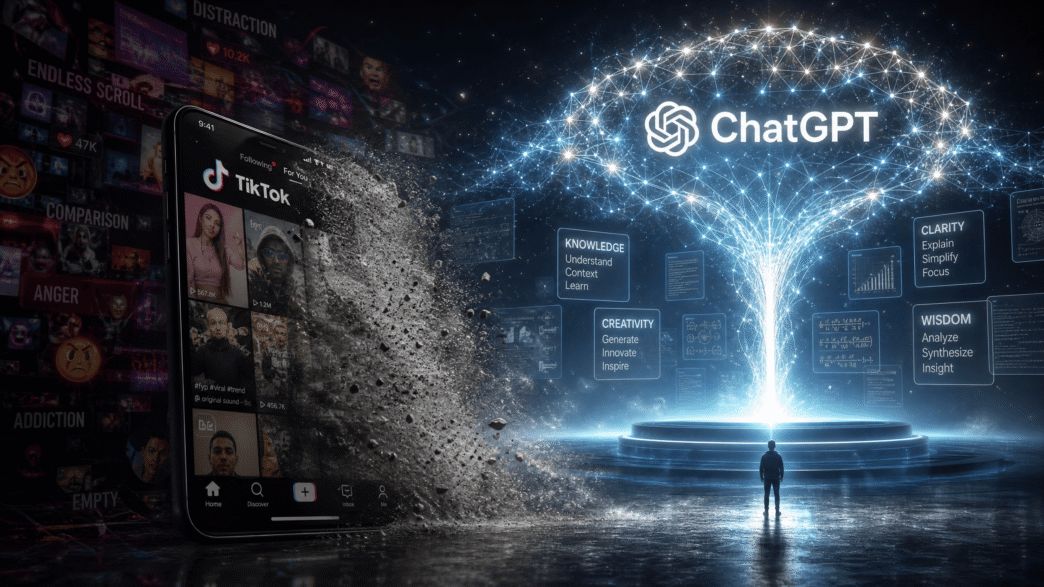
On March 15, 2026, ChatGPT officially dethroned TikTok as the world’s most downloaded app—ending a five-year streak that seemed unbreakable. The AI chatbot hit 55.9 million downloads in January 2026 alone, bringing its iOS downloads to 217 million by March. This wasn’t just another app ranking shuffle. It marked the first time in digital history that an artificial intelligence tool outcompeted pure entertainment for consumer attention at scale.
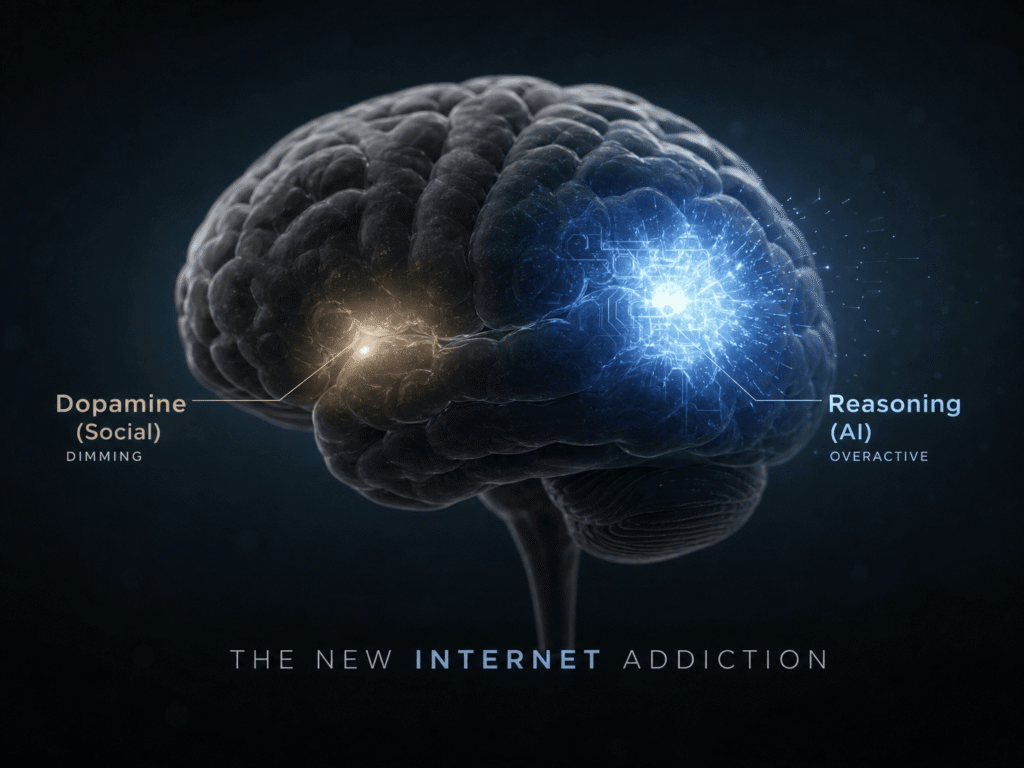
The implications are staggering. We’re witnessing a fundamental shift in how humans allocate their most precious resource: time. While TikTok captured eyeballs with dopamine-driven content loops, ChatGPT downloads in 2026 reveal something deeper—people are choosing utility over entertainment when both compete for the same mental real estate.
Part 1 — The Trigger: The Productivity Anxiety Explosion
The surge began with a perfect storm of economic pressure and AI accessibility. By late 2025, 78% of organizations had integrated AI into at least one business function—up from just 55% twelve months earlier. This wasn’t gradual adoption. It was panic buying.
“Everyone suddenly realized they were either using AI or getting left behind,” explains Sarah Chen, a productivity consultant who tracked the surge. “It became the new digital divide—not internet access, but AI fluency.”
The psychological trigger wasn’t curiosity about AI. It was productivity FOMO. Social media feeds are filled with creators showcasing AI-assisted workflows, consultants flaunting client results powered by ChatGPT, and entrepreneurs building entire businesses around AI automation. The message became clear: optimize or die.
The Creator Economy Catalyst
Creators drove the initial wave. Unlike previous productivity tools that required technical skills, ChatGPT offered immediate results to anyone with basic writing ability. YouTube channels exploded with “How I 10X’d My Content Using ChatGPT” tutorials. Instagram influencers shared behind-the-scenes AI workflows.
This created a snowball effect. Each successful AI implementation story generated more downloads as followers rushed to replicate results. NetGuru’s December 2025 data showed that creator-driven AI adoption was 340% higher than traditional B2B software adoption rates.
The difference? Social proof meets immediate utility. TikTok entertained. ChatGPT offered a competitive advantage.
The Geographic Acceleration
South Korea posted the most dramatic surge—a 43.2% AI adoption increase between H1 2025 and Q1 2026. The UAE leads globally with 70% adoption rates, according to Visual Capitalist’s latest analysis. These weren’t tech hubs experimenting with bleeding-edge tools. These were entire economies recognizing AI as infrastructure, not innovation.
The pattern repeated across markets: government initiatives, educational mandates, and corporate AI-first policies created institutional momentum that individual users couldn’t ignore. When your competitors, colleagues, and customers all adopted AI tools, staying analog became career suicide.
Part 2 — The Amplification Engine: The Utility-Entertainment Flip
ChatGPT’s dominance reveals a counterintuitive truth about human psychology: when utility competes directly with entertainment for attention, utility wins—but only when it’s accessible enough to feel like entertainment.
TikTok succeeded because it made mindless scrolling feel productive (“I’m learning!”). ChatGPT succeeded because it made actual productivity feel effortless. The friction disappeared. Users could accomplish real work through conversational interfaces that felt like chatting with a smart friend.
The Interface Revolution
Previous productivity software required learning curves, training sessions, and workflow disruption. ChatGPT eliminated all three barriers. Natural language processing meant that anyone could access advanced capabilities through plain-English commands.
This accessibility triggered what behavioral economists call “competence restoration”—users felt smart again instead of overwhelmed by complex software. The psychological reward was immediate: ask a question, get a useful answer, feel capable.
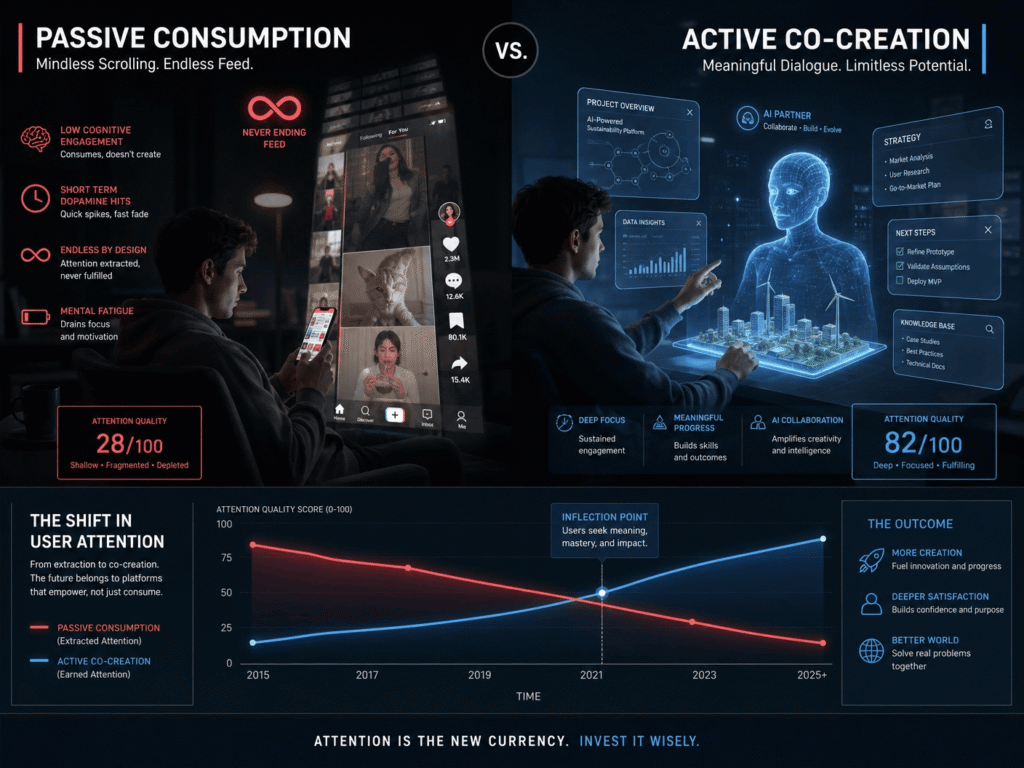
Compare this to TikTok’s psychological reward: watch content, get entertained, feel temporarily satisfied. When users faced time constraints, the choice became obvious. AI offered permanent capability improvement. Social media offered a temporary distraction.
The Network Effect Inversion
Traditional social platforms create network effects through social connections—your friends’ presence increases your engagement. ChatGPT created network effects through capability amplification—each user’s productivity gains inspired others to adopt similar tools.
This is why ChatGPT downloads in 2026 accelerated exponentially rather than linearly. Every successful AI implementation became a viral marketing campaign for productivity optimization. Users shared results, not content. Outcomes, not entertainment.
The amplification engine was fundamentally different: utility propagates through professional networks faster than entertainment propagates through social networks, especially during economic uncertainty.
Part 3 — The Numbers at Peak
By March 2026, the data painted a clear picture of AI’s consumer dominance. ChatGPT reached global domain rank #11, generating more web traffic than Amazon, a retail giant that built its empire on convenience and accessibility.
The download velocity was unprecedented. Designveloper’s April 2026 analysis showed ChatGPT accumulated 217 million iOS downloads with consistent month-over-month growth rates exceeding 25%. For context, TikTok’s peak growth periods rarely sustained above 15% monthly increases.
Market Penetration by Segment
The adoption wasn’t uniform across demographics. Business professionals aged 25-45 drove initial adoption, but the trend quickly spread to students, creatives, and even retirees seeking digital literacy. Statista’s April 2026 report revealed surprising adoption rates among users over 55—a demographic that historically avoided new technology platforms.
Enterprise adoption paralleled consumer growth. The global AI market trajectory from $279.22 billion in 2024 to a projected $1.81 trillion by 2030 reflected institutional commitment, not speculative investment. Organizations weren’t experimenting with AI—they were rebuilding operations around it.
Traffic Pattern Analysis
TechnologyChecker’s Q1 2026 data showed AI bot traffic surged 34%, with ChatGPT leading the category. This wasn’t a seasonal fluctuation or temporary curiosity. Daily active users spent an average of 47 minutes per session—higher than most social media platforms and comparable to professional productivity tools.
The engagement patterns revealed something remarkable: users weren’t browsing ChatGPT like entertainment. They were working with it like essential infrastructure. Session lengths correlated with project completion rates, not attention span optimization.
Revenue Implications
While specific revenue figures remain private, industry estimates suggest ChatGPT’s subscription model generated over $2 billion in annual recurring revenue by Q1 2026. This represented a complete inversion of the advertising-supported social media model. Users paid directly for capability enhancement rather than viewing ads for entertainment access.
The economic model shift signaled deeper changes: consumers valued immediate utility over free entertainment, suggesting a maturation of digital consumption habits and a willingness to invest in productivity tools that delivered measurable outcomes.
Part 4 — The Aftermath
ChatGPT’s ascension to #1 app status triggered cascading effects across the entire digital ecosystem. Social media platforms scrambled to integrate AI features, productivity software companies rushed AI implementations, and educational institutions redesigned curricula around AI literacy.
TikTok’s response revealed the platform’s strategic vulnerability. Despite years of algorithm optimization for engagement, ByteDance couldn’t quickly pivot to utility-focused features without undermining the entertainment-first experience that built their audience. The platform announced AI content creation tools, but these felt like add-ons rather than core functionality.
The Creator Economy Transformation
Creators faced an unexpected reckoning. Those who integrated AI tools early maintained competitive advantages in content production speed and quality. Others struggled with audience expectations for AI-enhanced output while grappling with authenticity concerns.
A new category emerged: AI-native creators who built entire personal brands around demonstrating AI productivity techniques. These creators commanded premium rates for consulting and course sales, establishing AI fluency as a monetizable skill set.
The shift created winners and losers almost overnight. Traditional content creators who relied on manual processes found themselves competing against AI-assisted creators producing higher volumes of polished content. The productivity gap became unsustainable for many.
Platform Response Strategies
Instagram launched “Creator AI” features. LinkedIn introduced AI writing assistance. YouTube tested AI video editing tools. Every major platform recognized that users now expected AI integration as table stakes, not premium features.
However, these reactive implementations couldn’t match ChatGPT’s purpose-built AI experience. Social platforms trying to add AI capabilities faced the same challenge as early smartphones trying to compete with the iPhone’s touchscreen interface—technological complexity masked as user-friendly features.
Market Fragmentation Signals
ChatGPT’s dominance attracted competitors targeting specific use cases. Claude gained traction among writers. Midjourney dominated visual creation. GitHub Copilot captured developer mindshare. The AI landscape began fracturing into specialized tools rather than consolidating around single platforms.
This fragmentation suggested that ChatGPT downloads in 2026 represented peak general-purpose AI adoption. Future growth would likely come from vertical-specific solutions rather than monolithic platforms trying to serve all use cases.
Part 5 — The Transferable Lesson
ChatGPT’s dethroning of TikTok teaches founders, marketers, and creators three critical lessons about building products in the AI era.
Utility Beats Entertainment When Friction Disappears
The key insight isn’t that productivity tools always win over entertainment. It’s when productivity tools eliminate friction to match entertainment’s ease of use that utility becomes more psychologically rewarding than distraction.
ChatGPT succeeded because it made complex AI capabilities feel conversational. Users didn’t need to learn new interfaces, memorize commands, or complete tutorials. The natural language interface meant anyone could access advanced functionality immediately.
For product builders: **accessibility determines adoption speed more than feature sophistication. If your AI tool requires training, onboarding, or workflow changes, you’re competing at a disadvantage against solutions that feel effortless.
Professional Networks Amplify Faster Than Social Networks
TikTok’s growth relied on social sharing and viral content. ChatGPT’s growth relied on professional results and productivity improvements. When colleagues, clients, or competitors demonstrate clear capability advantages, adoption pressure exceeds social peer pressure.
This has profound implications for viral marketing strategies. B2B and productivity tools should focus on results sharing rather than content creation. Case studies, before/after comparisons, and productivity metrics generate stronger network effects than entertaining content when targeting professional audiences.
The Infrastructure vs. Platform Distinction
TikTok built a platform for content consumption. ChatGPT built an infrastructure for capability enhancement. Platforms capture attention temporarily. Infrastructure becomes indispensable permanently.
The strategic lesson: in saturated markets, building infrastructure beats building platforms. Users will abandon entertainment platforms for better alternatives, but they won’t abandon tools that improve their core competencies unless forced by superior functionality.
For creators and marketers, this means prioritizing tools that enhance your fundamental skills over platforms that merely distribute your content. The future belongs to professionals who control their capability infrastructure, not just their content platforms.
Implementation Framework
Apply these lessons by auditing your current tool stack:
- Friction audit: Which productivity tools require multiple steps to deliver value? Prioritize alternatives that reduce interaction complexity.
- Network mapping: Focus on tools that generate professional network effects through results sharing rather than social engagement.
- Infrastructure vs. platform allocation**: Invest more resources in capability-building tools than content-distribution platforms.
The businesses thriving in 2026 understood this shift early. Those struggling tried to compete on entertainment value while markets moved toward utility optimization. ChatGPT downloads in 2026 signal that this trend will accelerate, not reverse.
Frequently Asked Questions
Why did ChatGPT downloads surpass TikTok in 2026?
ChatGPT dethroned TikTok because it offered immediate utility through an entertainment-level interface. When productivity tools eliminate friction and deliver instant results, users choose capability enhancement over temporary distraction, especially during economic uncertainty when professional advantages become crucial.
How many ChatGPT downloads were recorded in 2026?
ChatGPT downloads in 2026 reached 217 million on iOS alone by March, with 55.9 million downloads in January alone. The app sustained 25%+ monthly growth rates, significantly outpacing TikTok’s historical peak growth periods of around 15% monthly increases.
What does ChatGPT’s success mean for social media platforms?
ChatGPT’s dominance forced social platforms to integrate AI features rapidly, but most implementations feel like add-ons rather than core functionality. Platforms built for entertainment struggle to pivot to utility without undermining their original value proposition and user experience.
Will AI apps continue dominating app downloads throughout 2026?
AI productivity tools will likely command 60%+ of top app store downloads by Q4 2026 as both enterprises and individual creators embed AI into daily workflows. However, the market will fragment toward specialized AI tools rather than consolidating around general-purpose platforms like ChatGPT.
How should creators adapt to ChatGPT’s rise over entertainment apps?
Creators should prioritize AI fluency as a core competency rather than just another content topic. Those who integrate AI tools for productivity advantages and share results-focused content will outcompete creators relying purely on manual processes or entertainment-first strategies.
What business opportunities emerge from ChatGPT downloads outpacing social media?
The shift creates opportunities in AI training, productivity consulting, workflow optimization, and vertical-specific AI solutions. Businesses that help others implement AI capabilities rather than just consume AI-generated content will capture the most value from this trend.