








In 2026, Microsoft’s Work Trend Index revealed that 58% of AI users said they were producing work they couldn’t have a year ago. That’s not incremental—it’s transformative. AI copilots have shifted from novelty tools to mainstream workplace infrastructure, embedded in Microsoft 365, GitHub, Salesforce, and countless SaaS platforms.
The shock isn’t that copilots exist. It’s that they’ve become unavoidable. The question is no longer “Should I use AI at work?” but “What does my value look like when copilots do half the execution?”
Part 1 — The Trigger
The trigger was integration into everyday tools. Copilots weren’t launched as standalone apps; they were woven into Word, Excel, Outlook, and IDEs. That mattered because workers didn’t need new habits. They simply opened the same tools and found copilots waiting.
The pandemic-era shift to remote work had already normalized digital collaboration. Copilots slid into that workflow seamlessly. Suddenly, drafting emails, summarizing meetings, or generating code snippets became faster, easier, and less intimidating.
The second trigger was enterprise endorsement. When Microsoft, Google, and Salesforce branded copilots as productivity accelerators, adoption gained legitimacy. Workers didn’t feel like they were experimenting—they felt like they were keeping up.
Part 2 — The Amplification Engine
Why did copilots explode instead of plateau? The amplification engine was a mix of psychology, incentives, and culture.
- Psychology: Copilots solved the “blank page problem.” Humans dread starting from scratch. Copilots eliminated that anxiety by offering drafts, options, and scaffolds.
- Incentives: Managers saw productivity metrics rise. Companies realized copilots were cheaper than hiring additional staff. CFOs loved the math.
- Culture: Social proof accelerated adoption. Once one team used copilots to draft reports in minutes, others followed to avoid looking inefficient.
Ironically, automation anxiety fueled adoption. Workers feared being replaced, so they adopted copilots to stay competitive. The very fear of obsolescence became the engine of adoption.
Part 3 — The Numbers at Peak
Public reporting highlights the scale:
- Microsoft Work Trend Index (2026): 20,000 workers surveyed across 10 countries; 49% of Copilot chats supported cognitive work.
- Usage metrics: 58% of AI users produced work they couldn’t a year earlier; among advanced users, that number hit 80%.
- Enterprise adoption: Surveys show near-universal interest in moving from copilots to full AI agents.
- Market signals: Analysts report billions in enterprise spending on copilots and agents, with valuations of AI productivity startups soaring.
These numbers show copilots aren’t niche—they’re infrastructure.
Part 4 — The Aftermath
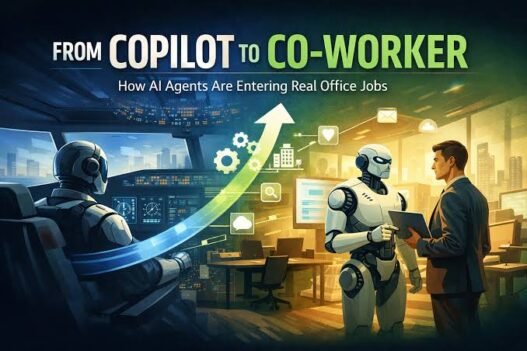
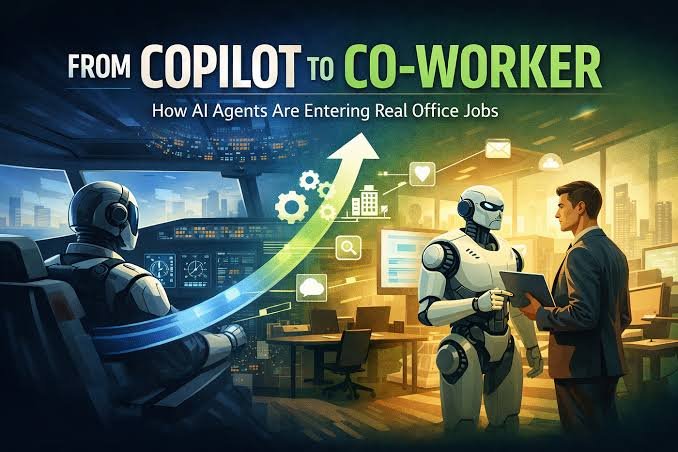
The aftermath is a blurring of roles. Copilots are evolving into colleagues—agents that don’t just assist but proactively orchestrate workflows.
Winners: Companies that invested early in AI-ready data and governance frameworks. They redesigned workflows, trained staff, and treated copilots as infrastructure.
Losers: Organizations that treated copilots as gimmicks. They failed to reskill staff, ignored workflow redesign, and now lag.
Unintended consequences:
- Overreliance: Workers sometimes defer too much judgment to copilots.
- Equity gaps: Advanced users reap disproportionate benefits, widening productivity inequality.
- Trust collapse risk: Errors or hallucinations erode confidence if not managed transparently.
Part 5 — The Transferable Lesson
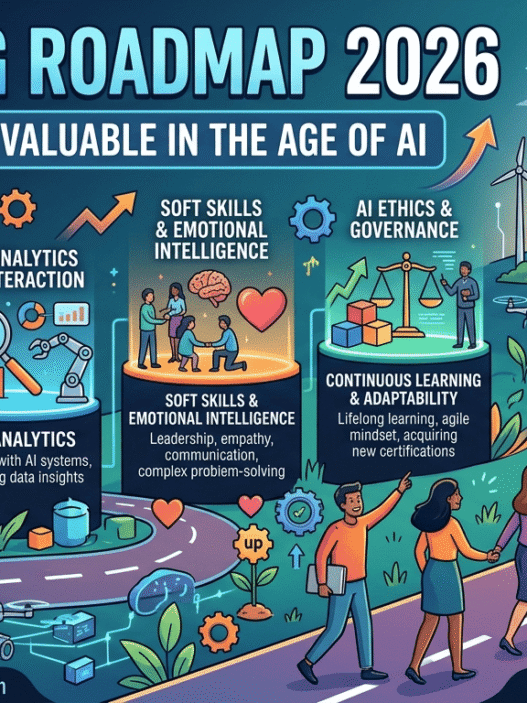
For founders, marketers, and professionals, the lesson is clear: value now lies in orchestration, judgment, and trust—not execution.
Copilots handle drafts, calculations, and coordination. Humans must define problems, verify outputs, and synthesize insights.
This matters because the future of work is not man versus machine—it’s man plus machine versus irrelevance. The winners will be those who design workflows where copilots accelerate execution, but humans retain agency, ethics, and creativity.
Frequently Asked Questions
1. Will AI copilots replace jobs? They replace tasks, not roles. Jobs evolve toward judgment, synthesis, and relationship work.
2. How do I stay valuable with copilots? Focus on problem framing, verification, communication, and orchestration.
3. Are copilots trustworthy? They’re useful but imperfect. Transparency, confidence scores, and human oversight are essential.
4. What industries benefit most? Knowledge work—law, marketing, software, consulting—where drafting and analysis dominate.
5. What’s next after copilots? Agentic AI: systems that act as colleagues, proactively orchestrating workflows and making autonomous decisions.