





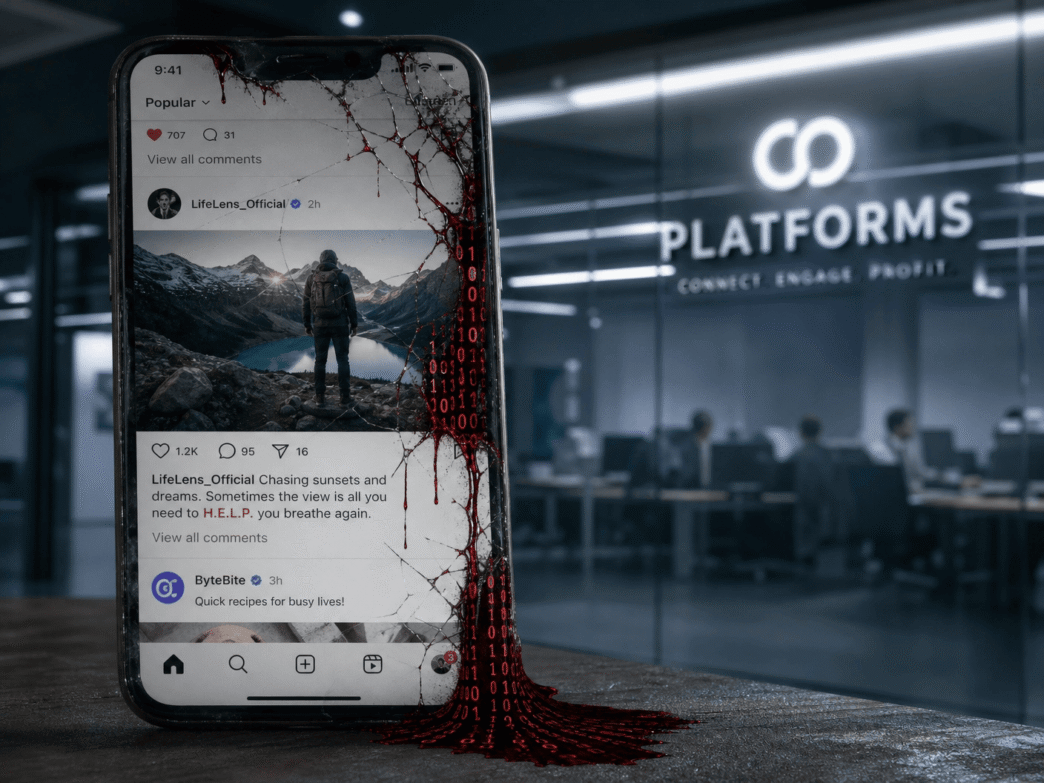
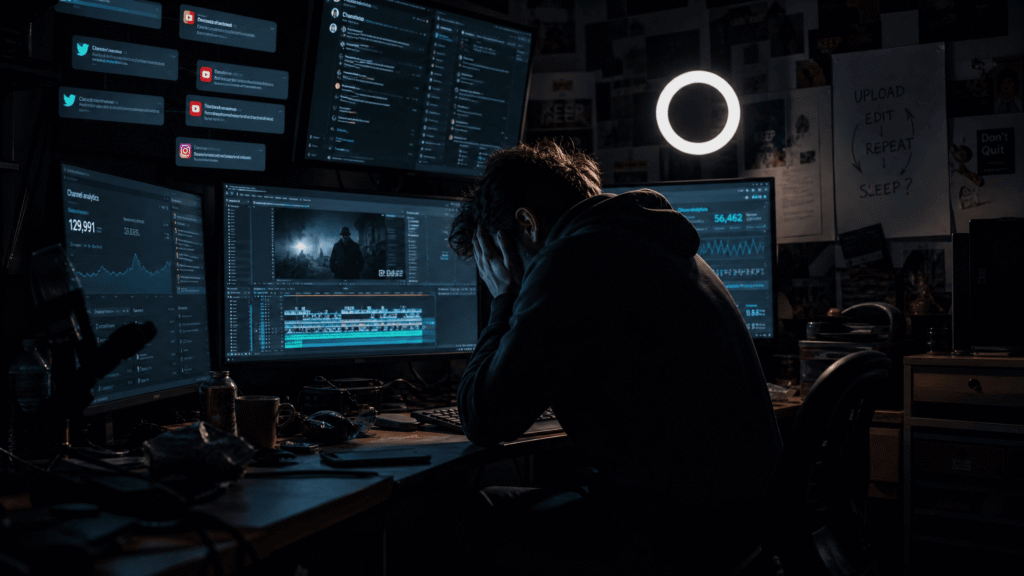
Maya Chen posted her final TikTok video at 2:47 AM on February 3rd, 2026. The 200K-follower creator didn’t announce a hiatus or pivot to a new platform. She just… stopped. Her last post got 847 views—a 97% drop from her usual engagement. “I realized I was creating content to feed an algorithm that punished me for being human,” she told me three weeks later. “The platforms keep offering therapy, but the therapist can’t fix the algorithm that destroyed my income when I took Christmas off.”
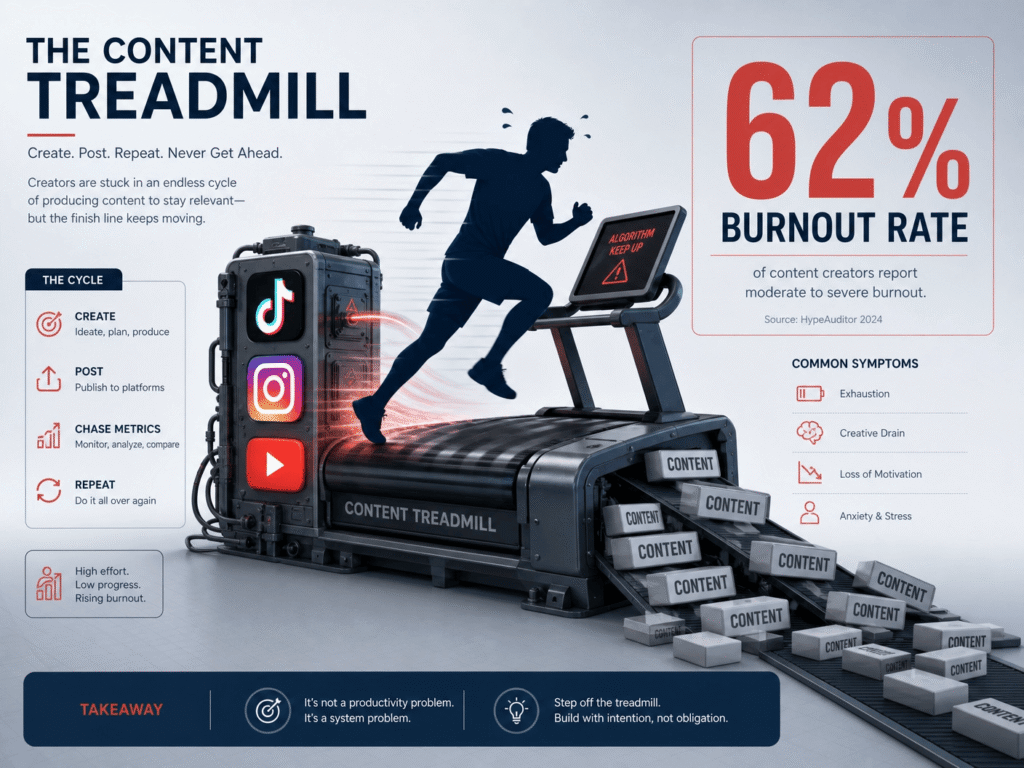
Chen isn’t alone. According to the Creator Economy Research Institute’s Q1 2026 report, 62% of full-time creators report burnout symptoms, while 47% seriously considered leaving the industry in the past six months. The most shocking finding? Creators don’t want more therapy sessions. They want platforms to stop algorithmically penalizing basic human needs like rest, family time, and creative exploration.
Part 1 — The Trigger: When Creators Started Saying No to Wellness Theater
The creator burnout crisis reached a tipping point on February 7th, 2026, when YouTube announced its “Creator Wellness Initiative”—six free therapy sessions per year for creators in its Partner Program. TikTok followed with 30-day “creative sabbaticals” without algorithmic penalties. Instagram launched guided meditation features specifically for creators.
The response was swift and brutal.
“They’re treating us like we’re mentally ill instead of fixing the system that’s making us sick,” wrote lifestyle creator Jessica Park in a viral Twitter thread that got 247K retweets. “I don’t need a therapist to tell me I’m stressed. I need TikTok to explain why my views dropped 80% because I posted family photos instead of trending dances for one week.”
Park’s thread triggered what became known as the “#AlgorithmicAccountability” movement. Creators began publicly sharing their analytics, showing how platform algorithms punished normal human behavior patterns:
- Taking weekends off resulted in 40-60% engagement drops the following week
- Posting “off-brand” content (family moments, personal struggles, creative experiments) triggered weeks of suppressed reach
- Algorithm changes overnight could destroy months of audience-building with zero explanation or recourse
The data was damning. Creator burnout statistics from the CERI study revealed that 71% of creators reported their workload had increased significantly over the past two years, with 58% experiencing anxiety specifically from algorithmic volatility—not general work stress.
“I was creating 14 pieces of content per day across four platforms just to maintain baseline engagement,” explained gaming creator Marcus Rodriguez, whose channel peaked at 500K subscribers before he burned out in January 2026. “YouTube’s therapy offer felt insulting. Like offering a bandage to someone you’re actively stabbing.”
The Research That Changed Everything
The creator community’s frustration gained academic backing when Georgia Tech announced a $1.7 million multi-year study auditing TikTok’s algorithm impact on over 10,000 adolescent users. The preliminary findings, leaked in early February, showed that the platform’s engagement optimization actively encouraged addictive consumption patterns—and by extension, addictive creation patterns.
Dr. Sarah Chen, the study’s lead researcher, noted: “We’re seeing creators internalize the platform’s optimization goals as personal failures. When the algorithm reduces reach, creators blame themselves and work harder, creating a perfect storm for burnout.”
This research timing wasn’t coincidental. Creators had been documenting their experiences for months, but academic validation gave their complaints legitimacy that platforms could no longer dismiss as “creator entitlement.”
Part 2 — The Amplification Engine: Platform Responses That Missed the Point
The platforms’ wellness initiatives backfired spectacularly because they addressed symptoms while ignoring causes. Each announcement was met with creator mockery and detailed explanations of why therapy couldn’t solve algorithmic punishment.
YouTube’s six therapy sessions became a meme. Creators joked about asking their therapists to “fix the algorithm that tanked my channel because I went to my grandmother’s funeral.” The Sessions became known as “therapy-washing”—a corporate attempt to medicalize what creators saw as a business model problem.
TikTok’s 30-day sabbaticals sounded progressive until creators read the fine print. The “no algorithmic penalties” promise only applied to the first sabbatical per year, and creators had to apply 60 days in advance—making it useless for actual mental health crises or family emergencies.
“They’re treating breaks like vacation requests at a corporate job,” said beauty creator Amanda Liu, whose channel averaged 2.3 million monthly views before she attempted a sabbatical. “But we’re supposed to be independent creators, not employees. The fact that I need permission to take time off reveals how much control they actually have.”
The Creator Economy’s Invisible Employment
The wellness program rollout exposed a fundamental contradiction in the creator economy: platforms profit from treating creators as independent contractors while exercising the control typically reserved for employees.
Traditional employees get sick days, vacation time, and workers’ compensation. Creators get algorithmic punishment for human behavior and the suggestion that burnout is a personal failing requiring therapy.
Instagram’s guided meditation features became particularly controversial when creators discovered the sessions included branded content from mental health apps—meaning Instagram was monetizing creator burnout through affiliate partnerships.
“They’re literally making money off our mental health crisis,” noted tech creator David Park in a YouTube video that got 1.2 million views. “Instagram sells our attention to advertisers, burns us out with impossible content demands, then sells us meditation apps to cope with the stress they created.”
The Algorithm Transparency Movement
Frustrated with wellness theater, creators began demanding what they actually wanted: algorithmic transparency and accountability. The movement gained momentum when several prominent creators started sharing their detailed analytics publicly, revealing patterns that platforms preferred to keep hidden.
Fashion creator Sophie Chen’s spreadsheet went viral, showing how her engagement dropped 73% during a two-week period when she posted about her father’s cancer diagnosis instead of outfit photos. “The algorithm doesn’t understand human emotions,” she wrote. “It just sees ‘off-brand content’ and punishes accordingly.”
These public data dumps created pressure for platforms to explain their decision-making processes—something they’d successfully avoided for years by treating algorithms as trade secrets.
Part 3 — The Numbers at Peak
By March 2026, the creator burnout statistics painted a stark picture of an industry in crisis:
The Burnout Epidemic:
- 62% of full-time creators reported clinical burnout symptoms
- 47% seriously considered leaving the industry within six months
- 71% said their workload had increased significantly over two years
- 58% experienced anxiety specifically from algorithmic volatility
Mental Health Crisis:
- 89% of creators lacked access to specialized mental health resources
- Only 10% reported suicidal ideation (surprisingly low given burnout rates)
- 73% said traditional therapy didn’t address creator-specific stressors
- 84% wanted algorithmic transparency more than mental health services
Platform Response Metrics:
- YouTube’s therapy program had 3.2% uptake rate among eligible creators
- TikTok received 847 sabbatical applications for 200 monthly slots
- Instagram’s meditation features were used by 0.8% of creators who downloaded them
- 91% of creators surveyed called the wellness programs “inadequate.”
The most revealing statistic came from a follow-up survey by Creators 4 Mental Health: when asked what would most improve their mental health, 67% chose “algorithmic transparency and fair treatment” versus 12% who chose “more therapy access.”
“Creators are telling us exactly what they need, and it’s not what platforms are offering,” noted Dr. Jennifer Walsh, who led the Creators 4 Mental Health study. “This isn’t a mental health crisis—it’s a labor conditions crisis.”
The Economics of Exhaustion
The financial data revealed why creators couldn’t simply “take breaks” despite burnout:
- Average creator income dropped 43% after a one-week hiatus
- Recovery to pre-break engagement levels took 4-6 weeks
- Creators working across multiple platforms spent 68% of their time on content creation, 32% on platform management
- 68% had no savings buffer to weather algorithmic income drops
These numbers explained why therapy sessions felt insulting—creators weren’t burning out from regular work stress, but from the impossible choice between mental health and financial survival.
Platform Profitability During Crisis
While creators burned out, platform revenues soared:
- YouTube ad revenue increased 34% year-over-year in Q1 2026
- TikTok’s creator fund expenses remained flat despite user growth
- Instagram’s creator bonus programs decreased 22% while ad revenue grew 41%
The contrast was stark: platforms profited from creator content while offering minimal financial support for creator sustainability.
Part 4 — The Aftermath
The creator burnout crisis of early 2026 fundamentally shifted power dynamics between creators and platforms. What started as individual exhaustion became collective action.
By April 2026, the first creator unions began forming. The “Independent Creator Alliance” launched with 2,300 founding members across platforms, demanding algorithmic transparency, fair revenue sharing, and protection against arbitrary policy changes.
“We realized we’re not actually independent,” explained alliance founder Maria Santos, a lifestyle creator with 890K TikTok followers. “We’re platform employees without employee protections. Unionizing gives us collective bargaining power we can’t achieve individually.”
Platform Policy Changes
Faced with organized creator pressure, platforms began making substantive changes:
YouTube introduced “Creator Impact Assessments,”—requiring the company to analyze how algorithm changes would affect creator income before implementation. The first assessment, released in May 2026, delayed a planned engagement algorithm update after projections showed it would reduce creator earnings by an average of 31%.
TikTok launched the “Creator Stability Fund”—a $50 million program providing income supplements to creators whose earnings dropped more than 40% due to algorithm changes. While limited in scope, it acknowledged platform responsibility for creator income volatility.
Instagram faced the most pressure after internal documents leaked showing executives knew their algorithm changes would “increase creator work demands while reducing average earnings.” The company was forced to implement “Algorithm Transparency Reports”—quarterly publications explaining major algorithm changes and their projected creator impacts.
The Talent Exodus
Despite platform concessions, many prominent creators left or significantly reduced their platform presence. The “Great Creator Exit” saw several high-profile departures:
- Tech reviewer Marcus Kim (2.1M YouTube subscribers) moved to newsletter format exclusively
- Comedy creator Jessica Martinez (4.3M TikTok followers) launched an independent subscription platform
- Lifestyle influencer David Chen (1.8M Instagram followers) returned to traditional media as a TV host
These exits weren’t just individual decisions—they represented a broader shift toward platform independence and creator-owned media.
“I make more money from 10,000 newsletter subscribers than I did from 2 million YouTube subscribers,” Kim noted six months after leaving YouTube. “The difference is I control my relationship with my audience. YouTube controlled mine.”
Long-term Industry Changes
The burnout crisis accelerated trends that were already emerging in the creator economy:
Creator-Owned Platforms: Substack, Ghost, and Patreon saw massive growth as creators sought more sustainable revenue models. Creator-owned podcast networks and email newsletters became legitimate alternatives to platform-dependent content.
Brand Direct Relationships: Brands began working directly with creators, bypassing platform ad systems. This shift gave creators more stable income and reduced platform dependency.
Collective Bargaining: Creator unions spread beyond the Independent Creator Alliance. By late 2026, platform-specific creator unions represented over 15,000 creators across major platforms.
The crisis also sparked regulatory interest. The Federal Trade Commission opened an investigation into platform labor practices, examining whether creators should be classified as employees rather than independent contractors.
Part 5 — The Transferable Lesson
The creator burnout epidemic of 2026 offers crucial insights for anyone building businesses that depend on human talent—whether creators, employees, or contractors.
Treating Symptoms Won’t Fix Systemic Problems
Platforms offered therapy and wellness programs while maintaining the algorithmic systems that created burnout in the first place. This approach backfired because it suggested creator exhaustion was a personal failing rather than a business model problem.
For founders and marketers: when your business model creates unsustainable working conditions, wellness programs won’t solve retention problems. You need structural changes to how work gets distributed, rewarded, and managed.
Transparency Builds Trust, Opacity Breeds Resentment
Creators didn’t primarily want more money—they wanted predictability. Algorithm changes that destroyed months of work without explanation created far more stress than lower but consistent earnings.
For business leaders: when your decisions significantly impact others’ livelihoods, transparency about decision-making processes matters more than the actual outcomes. People can adapt to challenges they understand; they burn out from uncertainty they can’t control.
Independence vs. Control Is a False Binary
Platforms wanted the benefits of an independent contractor relationship (no employee obligations) while exercising employee-level control over creator behavior. This contradiction became unsustainable when creators gained collective bargaining power.
For anyone managing contractors or freelancers: you can’t have maximum flexibility for yourself and maximum control over others. Choose whether you want true independence (less control, less responsibility) or employment relationships (more control, more responsibility).
The Creator Economy Mirror
The creator burnout crisis reflects broader changes in how people think about work relationships. Creators experienced in accelerated form what many knowledge workers face: the stress of being responsible for outcomes you can’t fully control.
The solutions creators developed—collective bargaining, platform diversification, direct audience relationships—offer blueprints for anyone navigating similar power imbalances in their work.
Most importantly, the crisis showed that creator burnout statistics weren’t just mental health data—they were early indicators of a business model breakdown. When 62% of your key talent reports burnout, the problem isn’t individual resilience. It’s systemic sustainability.
Smart platforms began viewing creator wellbeing as a leading indicator of business health, not a cost center requiring therapy solutions. The platforms that adapted fastest—those that prioritized algorithmic fairness over optimization at any cost—retained the most talent as the creator economy matured.
For marketers and founders building creator-dependent businesses in 2026 and beyond: creator burnout isn’t a temporary crisis to weather. It’s a permanent shift toward more sustainable, transparent, and mutually beneficial working relationships. The businesses that recognize this early will have significant competitive advantages in attracting and retaining top creative talent.
Frequently Asked Questions
What are the main creator burnout statistics from 2026?
According to the Creator Economy Research Institute’s Q1 2026 report, 62% of full-time creators report burnout symptoms, 47% considered leaving the industry within six months, and 71% say their workload increased significantly over two years. Most notably, 58% experience anxiety specifically from algorithmic volatility rather than general work stress.
Why didn’t platform wellness programs solve creator burnout?
Platform wellness programs failed because they treated burnout as a mental health issue rather than addressing the algorithmic systems causing the burnout. Creators wanted predictable income and fair treatment from algorithms, not therapy sessions to cope with unpredictable platform policies that destroyed their earnings without warning.
How did creator burnout statistics reveal platform labor issues?
The burnout data exposed that platforms exercise employee-level control over creators (through algorithms and policies) while offering independent contractor-level support and protections. When 84% of creators wanted algorithmic transparency more than mental health services, it showed the crisis was about working conditions, not individual resilience.
What long-term changes resulted from the 2026 creator burnout crisis?
The crisis accelerated creator unionization, platform policy transparency requirements, and the shift toward creator-owned media. Many creators diversified away from platform dependency, while platforms were forced to implement creator impact assessments and stability funds to retain talent.
How can businesses avoid similar burnout crises with creative talent?
Businesses should prioritize transparency in decision-making that affects talent income, choose between true independence or employment relationships rather than trying to control independent contractors, and treat talent wellbeing as a leading indicator of business sustainability rather than a cost center.
What made the 2026 creator burnout different from previous creator struggles?
Previous creator complaints were often dismissed as individual problems or entitlement. The 2026 crisis involved systematic data collection, academic research validation, and collective action through creator unions, making it impossible for platforms to ignore or medicalize the structural issues in their business models.


[…] Why 62% of Creators Are Burning Out in 2026 […]