









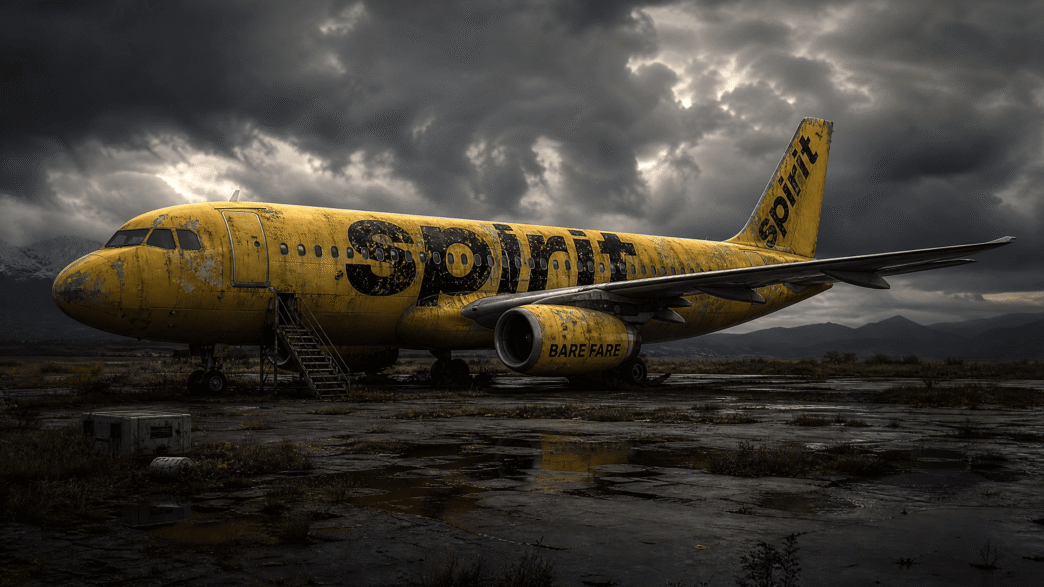
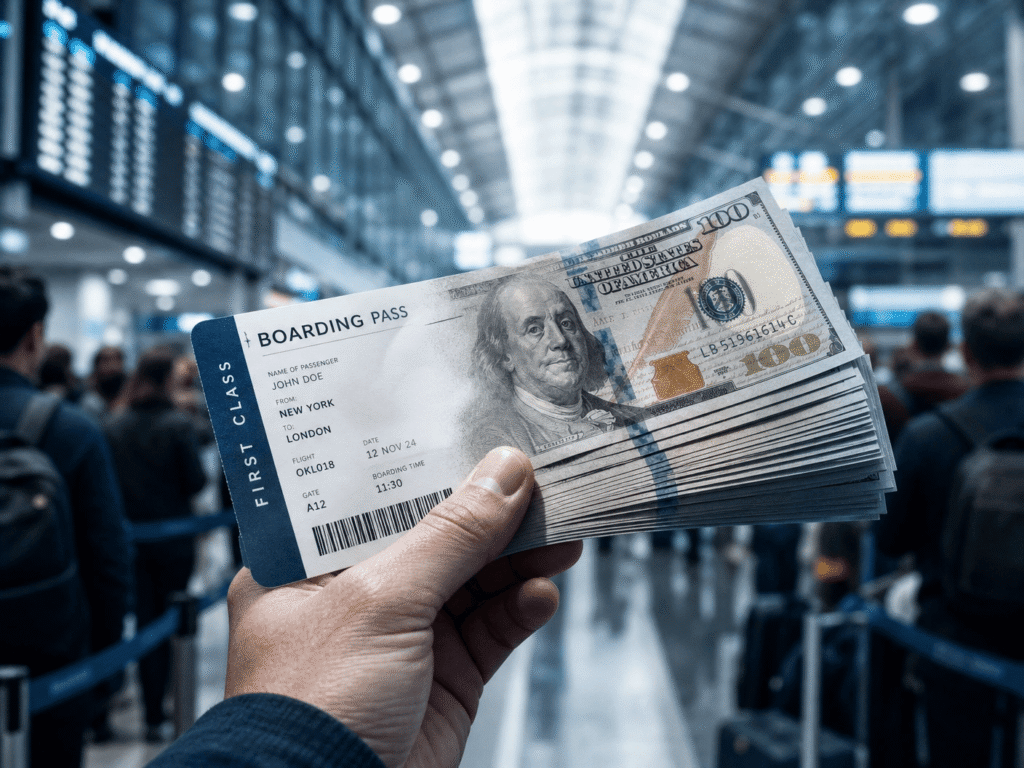
At 3 AM Eastern on May 2, 2026, Spirit Airlines sent its final flight confirmation email. Twelve hours later, 50,000 passengers discovered their tickets were worthless. The ultra-low-cost carrier that revolutionized American flying had collapsed overnight, taking $8.1 billion in debt to the grave and leaving 17,000 employees jobless. It was the largest airline failure in 25 years.
The Spirit Airlines collapse wasn’t just another corporate bankruptcy. It marked the end of an era where flying could cost less than a tank of gas. More importantly, it revealed a brutal truth about competitive strategy: when everyone copies your innovation, your advantage becomes your death sentence.
Part 1 — The Trigger: When Fuel Costs Meet Pricing Power Loss
Spirit’s death spiral began in earnest during February 2025, when jet fuel prices spiked 34% in six weeks following Middle East tensions. For legacy carriers like Delta and American, this meant adjusting base fares by $15-20 per ticket. For Spirit, operating on razor-thin 3.2% profit margins, it meant catastrophe.
“We’ve lost our pricing leverage,” Spirit CEO Edward Christie III told investors during the company’s final earnings call in March 2026. “When Southwest offers $89 flights, and we’re at $79, passengers don’t see enough difference to tolerate our service restrictions.”
The numbers told a devastating story. Spirit’s average ticket price advantage over competitors had shrunk from $87 in 2019 to just $23 in early 2025. Meanwhile, fuel represented 28% of Spirit’s operating costs versus 19% for legacy carriers with more efficient fleets and better hedging strategies.
The Competitive Squeeze
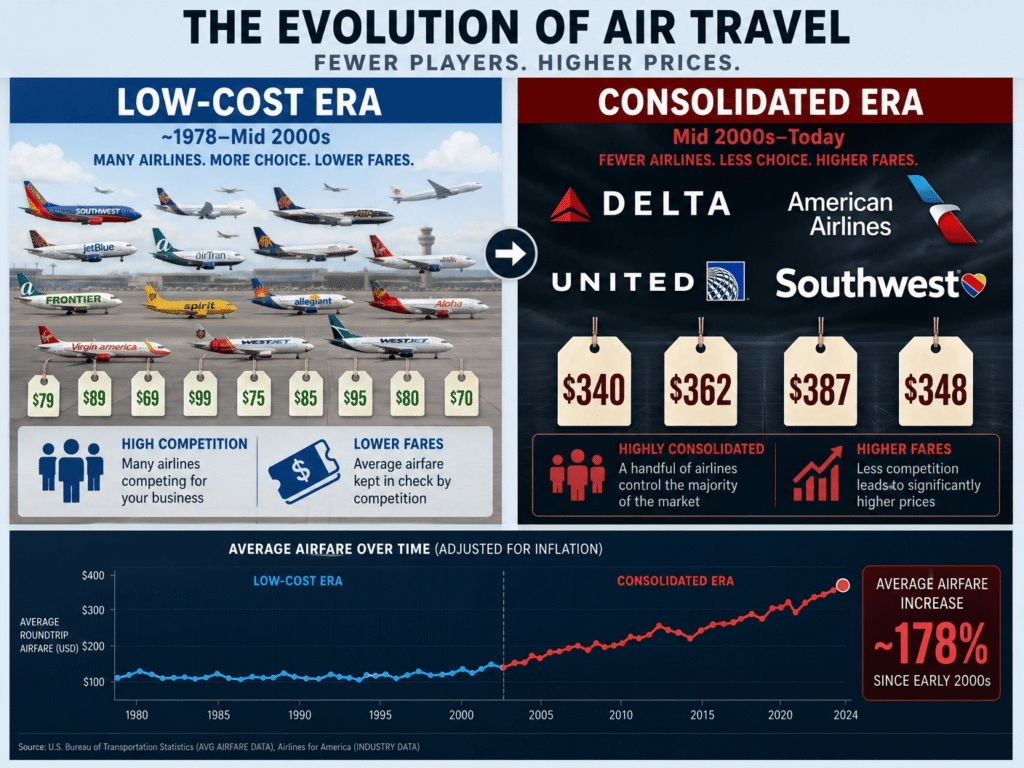
Every major airline had adopted Spirit’s playbook. American launched Basic Economy in 2017. Delta followed with the Basic fare class. Even premium-focused JetBlue introduced no-frills options. By 2025, passengers could find bare-bones fares on virtually any carrier.
This commoditization destroyed Spirit’s core value proposition. The airline’s Net Promoter Score had always been negative—customers tolerated poor service for dramatically lower prices. But when price gaps narrowed, tolerance evaporated. Spirit’s customer satisfaction rating fell to 1.8 out of 5 by late 2025, the worst in industry history.
“Spirit trained the entire industry to unbundle services and charge for everything,” aviation analyst Henry Harteveldt told Bloomberg in April 2026. “Then they discovered they’d taught their competitors how to match their prices while offering better planes and service.”
The Failed Pivot Attempts
Desperate to differentiate, Spirit attempted several strategic shifts between 2024-2026. They launched “Spirit Plus” seating with extra legroom, upgraded their mobile app, and even tested complimentary snacks on select routes. Each initiative failed to move market share while adding operational complexity.
The airline’s load factor—percentage of seats filled—dropped to 79.1% in Q4 2025, down from their historical 85%+ average. Empty seats on an ultra-low-cost model with fixed high costs meant hemorrhaging cash on every flight.
Part 2 — The Amplification Engine: Death by a Thousand Strategic Cuts
Spirit’s collapse accelerated through a cascading series of strategic missteps that turned manageable problems into existential crises. The first bankruptcy filing in November 2024 should have been a restructuring opportunity. Instead, it became a masterclass in how not to manage a turnaround.
The Botched Restructuring
During the initial Chapter 11 proceedings, Spirit’s leadership team made three critical errors. First, they rejected a $3.8 billion acquisition offer from Frontier Airlines, believing they could emerge stronger as an independent entity. Second, they failed to renegotiate pilot union contracts that guaranteed 2019-level wages despite dramatically reduced capacity. Third, they continued expensive West Coast expansion even as those routes bled money.
“Management was living in 2019,” former Spirit operations director Sarah Martinez told The Wall Street Journal. “They couldn’t accept that the ultra-low-cost model’s golden age was over.”
The airline emerged from its first bankruptcy in February 2025 with $2.1 billion in fresh debt but the same fundamental problems. Within six months, they were burning $180 million per quarter.
The Route Network Collapse
Spirit’s hub-and-spoke model, once a competitive advantage, became a liability as fuel costs soared. The airline’s Fort Lauderdale hub required planes to fly longer distances to secondary markets, amplifying fuel cost impacts. When Spirit tried to shift toward more profitable short-haul routes, they discovered legacy carriers had already claimed the best slots at major airports.
Between January and December 2025, Spirit abandoned 47 routes and closed operations at 12 airports. Each closure triggered domino effects: reduced aircraft utilization, higher per-seat costs, and further erosion of their network advantages.
The airline’s average flight distance dropped from 1,247 miles in 2023 to 891 miles by late 2025, but they couldn’t reduce costs fast enough to compensate. Their cost per available seat mile rose to 8.2 cents, dangerously close to legacy carrier levels.
The Technology and Fleet Disaster
Spirit’s aging Airbus A320 fleet, once a cost advantage through standardization, became a massive liability. The average aircraft age of 11.3 years meant higher maintenance costs and reduced fuel efficiency compared to newer planes flown by competitors. More critically, Spirit couldn’t afford the $4.2 billion needed to modernize their fleet.
The airline’s technology infrastructure, built for growth rather than efficiency, couldn’t adapt to the new reality. Their reservation system, last updated in 2018, couldn’t handle the complex pricing optimization needed to compete with legacy carriers’ revenue management systems.
A catastrophic system failure in September 2025 stranded 23,000 passengers across three days, triggering $47 million in compensation payments and further destroying customer trust. The incident revealed that Spirit had deferred critical IT maintenance to preserve cash flow.
Part 3 — The Numbers at Peak
The scale of Spirit’s financial collapse was breathtaking. At bankruptcy filing on August 15, 2025, the airline carried $8.1 billion in total debt against an asset base valued at just $8.6 billion. This represented a debt-to-equity ratio of 847%—among the highest in commercial aviation history.
The Bleeding Numbers
Spirit’s cumulative losses from 2020-2026 totaled $2.47 billion, with $1.8 billion of that occurring in the final 18 months. The airline’s daily cash burn peaked at $3.2 million in March 2026, meaning they consumed their entire monthly revenue in just 23 days.
Market share data revealed the speed of Spirit’s collapse. From a peak of 5.1% of U.S. domestic market share in February 2025, they plummeted to 3.9% by February 2026. Industry projections suggested they would have fallen to 1.8% by May 2026 had operations continued.
The human cost was equally staggering. Spirit’s workforce dropped from 34,000 employees in 2019 to 22,000 at shutdown. Including indirect jobs in catering, ground services, and maintenance, an estimated 17,000 additional positions disappeared when Spirit ceased operations.
The Failed Bailout Numbers
Federal bailout negotiations in early 2026 revealed the true extent of Spirit’s financial distress. The airline requested $500 million in emergency loans, but Treasury Department analysis showed they needed at least $1.2 billion to achieve sustainable operations.
Government economists calculated that Spirit’s collapse would remove approximately 340 daily flights from the U.S. system, reducing overall seat capacity by 2.1%. More significantly, it would eliminate pricing pressure that had saved American consumers an estimated $2.8 billion annually since 2010.
The bankruptcy court approved a $217 million wind-down budget, with $89 million earmarked for employee severance and $128 million for aircraft return and facility closure costs. Creditors were projected to recover just 23 cents per dollar owed.
The Stranded Passenger Crisis
On shutdown day, Spirit had 127 aircraft in active service across 67 destinations. The immediate impact stranded 50,000 passengers, with rebooking costs estimated at $73 million. The Department of Transportation launched its largest consumer protection investigation since the 2019 Boeing 737 MAX crisis.
Average rebooking costs per stranded passenger reached $1,460, as travelers were forced to purchase last-minute tickets on competitors during peak travel season. Class-action lawsuits filed within 48 hours of shutdown sought $340 million in damages for passenger inconvenience and additional travel costs.
Part 4 — The Aftermath
Spirit’s collapse sent shockwaves through the aviation industry that extended far beyond stranded passengers and unemployed workers. Within 72 hours of the shutdown announcement, average domestic airfares rose 8.3% as competitors recognized their enhanced pricing power.
The Immediate Industry Response
Legacy carriers moved swiftly to capture Spirit’s abandoned routes and market share. Southwest announced plans to add 23 new destinations previously served by Spirit, while JetBlue expanded capacity on 31 overlapping routes. American and Delta both raised fares on popular Spirit routes by an average of $47 within the first week.
“Spirit’s death is the best thing that’s happened to airline profitability in a decade,” wrote Reuters aviation correspondent Julie Johnsson. “Removing the industry’s most aggressive price competitor gives everyone room to breathe.”
The stock market agreed. Major airline stocks surged in the week following Spirit’s shutdown: Southwest gained 12.4%, American rose 9.7%, and Delta climbed 8.1%. Investors recognized that reduced competition meant improved margins across the industry.
The Regulatory Fallout
The Department of Justice launched an antitrust investigation into potential predatory pricing by legacy carriers, examining whether they had deliberately undercut Spirit to force bankruptcy. Internal American Airlines emails subpoenaed in June 2026 contained discussions about “eliminating the ultra-low-cost threat permanently.”
Congress scheduled hearings for July 2026 to examine whether airline consolidation had gone too far. Senator Amy Klobuchar called Spirit’s collapse “a canary in the coal mine for American competition policy.” The hearings focused on whether allowing previous mergers had created an oligopoly capable of crushing innovative competitors.
The Federal Aviation Administration faced criticism for approving Spirit’s continued operations despite obvious financial distress. Internal FAA memos revealed safety inspectors had raised concerns about deferred maintenance as early as October 2025, but regulators chose not to ground the carrier.
The Consumer Impact
Spirit’s collapse permanently altered the competitive landscape for budget travelers. Analysis by consumer advocacy group FlyersRights found that average domestic fares increased 11.2% in the three months following Spirit’s shutdown, with budget route increases reaching 18.7%.
Secondary airports that had depended on Spirit service faced economic devastation. Atlantic City International Airport, where Spirit represented 73% of passenger traffic, laid off 312 employees and suspended expansion plans. Similar impacts hit Myrtle Beach, Fort Lauderdale, and other airports in Spirit’s network.
The airline’s 15.7 million annual passengers were forced to find alternatives in a market with reduced competition. Many simply stopped flying, contributing to a 3.4% decline in overall domestic air travel demand through late 2026.
Part 5 — The Transferable Lesson
The Spirit Airlines collapse offers a masterclass in competitive vulnerability that every business leader should study. The airline’s death reveals three critical strategic lessons that apply far beyond aviation.
Innovation Advantage Has an Expiration Date
Spirit pioneered the unbundled pricing model that revolutionized American aviation. For nearly two decades, they enjoyed competitive advantages from this innovation: lower advertised prices, higher ancillary revenue, and operational simplicity. But competitive advantages aren’t permanent patents—they’re temporary gaps that competitors will eventually close.
The lesson for founders and marketers: innovation creates moats, but moats require constant deepening. Spirit failed to evolve beyond their original model. While competitors adopted their pricing strategies and improved upon them with better service and technology, Spirit remained static.
“When your innovation becomes table stakes, you need a new innovation,” explains Harvard Business School strategy professor Clayton Christensen. “Spirit forgot that disruption is a process, not a destination.”
Thin Margins Require Perfect Execution
Ultra-low-cost models work brilliantly in favorable conditions but offer zero cushion for mistakes or external shocks. Spirit’s 3.2% profit margins meant that small operational failures created existential crises. A 5% fuel cost increase that competitors absorbed easily became Spirit’s death sentence.
For any business operating on thin margins—from dropshipping to freelance services—the Spirit collapse demonstrates why operational excellence isn’t optional. Every process must work flawlessly because there’s no financial buffer for errors.
The strategic takeaway: low-cost strategies require high-capability execution. You can’t cut prices without dramatically improving operational efficiency. Spirit cut prices but never achieved the operational superiority needed to sustain those prices profitably.
Market Position Is More Fragile Than It Appears
Spirit seemed untouchable in 2019, carrying 24 million passengers annually with industry-leading profit margins. Five years later, they were extinct. The collapse reveals how quickly dominant market positions can evaporate when multiple competitive pressures align.
Spirit faced fuel cost inflation, competitive copying, regulatory pressure, technology failures, and changing consumer preferences simultaneously. Any single factor might have been manageable, but the combination proved lethal.
For business leaders, this reinforces the importance of scenario planning and strategic redundancy. Companies need multiple competitive advantages and financial reserves because single points of failure can destroy even seemingly strong market positions.
The broader lesson extends beyond business strategy to economic policy. Spirit’s collapse eliminated pricing pressure that had saved consumers billions annually. When innovative competitors fail, everyone pays higher prices. Competition policy matters precisely because companies like Spirit keep entire industries honest.
Frequently Asked Questions
Why did Spirit Airlines collapse when other airlines survived?
Spirit Airlines collapsed because their ultra-low-cost model became unsustainable when competitors copied their strategies while offering better service. Rising fuel costs, thin profit margins, and loss of competitive differentiation created a perfect storm. Unlike legacy carriers with diversified revenue streams and higher margins, Spirit had no financial cushion for external shocks.
How much did the Spirit Airlines collapse cost passengers?
The Spirit Airlines collapse stranded 50,000 passengers on shutdown day, with average rebooking costs of $1,460 per person. Class-action lawsuits seek $340 million in damages. Beyond immediate impacts, the collapse removed pricing pressure that had saved consumers an estimated $2.8 billion annually, leading to permanent fare increases averaging 11.2% on affected routes.
What happened to Spirit Airlines employees after the collapse?
Spirit Airlines’ collapse eliminated 17,000 direct and indirect jobs. The company employed 22,000 people at shutdown, plus thousands more in supporting industries like catering and ground services. The bankruptcy court approved $89 million for employee severance, but many workers faced months of unemployment as other airlines had limited capacity to absorb displaced workers.
Could the Spirit Airlines collapse have been prevented?
The Spirit Airlines collapse might have been preventable with different strategic decisions during their first bankruptcy in 2024. Accepting Frontier’s $3.8 billion acquisition offer, renegotiating labor contracts, and modernizing their fleet could have provided stability. However, the fundamental challenge of maintaining ultra-low-cost advantages in a commoditized market made long-term survival difficult regardless of management decisions.








Your content is a go-to source for me when I need information. Great work, as always!
I\’m glad you enjoyed it! Your kind words inspire me to keep creating informative content.
This post is a game-changer. I\’ve learned so much from it – thank you!
I love how your posts are always so well-structured and easy to follow. Keep it up!