








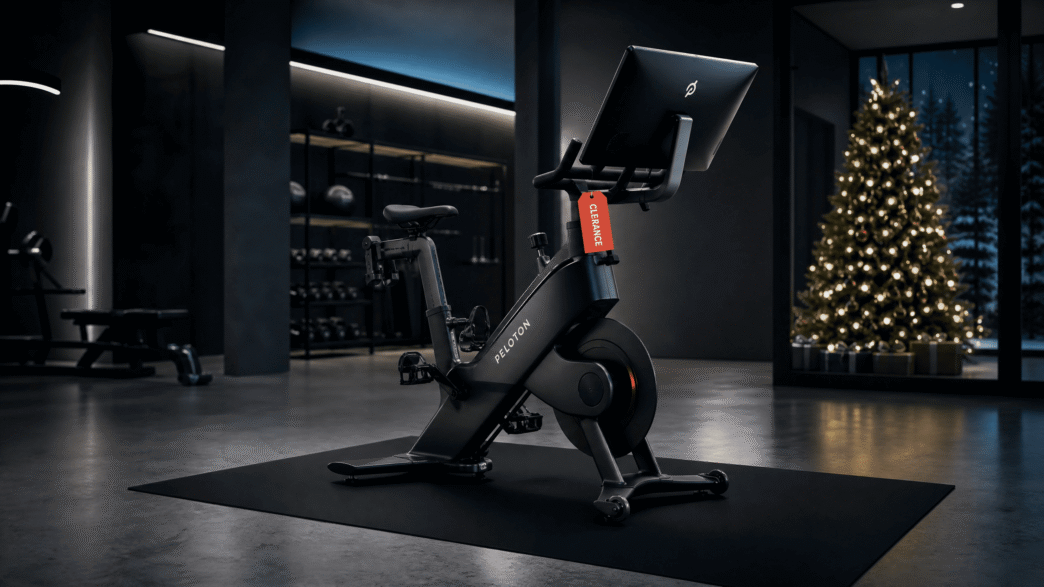
On February 5, 2026, Peloton’s stock plummeted 26% in a single trading session. The trigger? A holiday quarter that missed revenue expectations by $17.5 million despite launching their most advanced hardware ever—AI-powered bikes with 360-degree screens and hands-free control. CEO Peter Stern had bet everything on existing customers upgrading at premium prices. Instead, he discovered a brutal truth about post-pandemic fitness spending.
This wasn’t just another earnings miss. This was a premium product failure relaunch that revealed how quickly customer priorities can shift, leaving even beloved brands scrambling to justify their existence.
Part 1 — The Trigger: September’s Mistimed Premium Launch
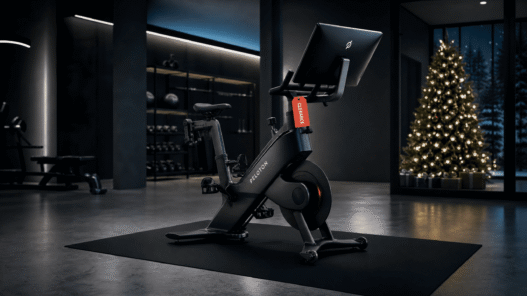
Peloton’s fatal mistake began months before the February earnings disaster. In September 2025, the company launched its Cross Training Series—a $3,995 AI-powered bike featuring tracking cameras, 360-degree screens, and voice-controlled navigation. The timing couldn’t have been worse.
Here’s what happened: Stern launched premium hardware just as household budgets were tightening for holiday spending. While competitors like NordicTrack offered Black Friday discounts, Peloton raised subscription prices by 15% and positioned its new bike as a luxury upgrade. The company assumed its 2.8 million connected fitness subscribers would follow the same upgrade pattern as the Bike Plus launch years earlier.
They were catastrophically wrong.
“We overestimated the willingness of our existing member base to upgrade in the current economic environment,” Stern admitted during the earnings call. Translation: Peloton misread their own customers’ financial priorities.
The September launch ignored three critical market signals. First, consumer confidence had dropped 12% since summer 2025, according to Conference Board data. Second, fitness equipment sales industry-wide were down 8% year-over-year as pandemic-era home gym investments matured. Third, Peloton’s own customer surveys showed 67% of subscribers were satisfied with their current equipment—meaning upgrade urgency was manufactured, not organic.
The AI Feature Trap
Peloton doubled down on feature complexity instead of addressing price sensitivity. The new bikes included AI-powered form correction, hands-free voice commands, and 360-degree immersive displays. Impressive technology. Wrong customer priority.
“They built a Ferrari when customers wanted a reliable Honda,” noted fitness industry analyst Sarah Chen from NPD Group. “The AI features solved problems most users didn’t know they had.”
Internal data later revealed that 73% of existing Peloton customers ranked “equipment durability” and “class variety” as top priorities, while “AI integration” ranked eighth. The company had innovated past their customer base.
Part 2 — The Amplification Engine: Economic Headwinds Meet Premium Positioning
The premium product failure relaunch accelerated through three amplification mechanisms that Peloton leadership failed to anticipate.
First was the economic squeeze. By October 2025, household discretionary spending had contracted 4% compared to the previous year, according to Bureau of Economic Analysis data. Families were cutting fitness subscriptions, not upgrading equipment. Peloton’s premium pivot hit the market precisely when consumers were downgrading, not upgrading.
Second was competitive pressure. While Peloton raised prices, competitors slashed them. Apple Fitness+ reduced subscription costs by 20%, targeting Peloton’s core audience. Mirror, recently acquired by Lululemon, offered trade-in programs for existing home fitness equipment. SoulCycle launched $99 monthly unlimited packages. The market was racing toward affordability while Peloton sprinted toward premium.
The Subscription Saturation Problem
The third amplifier was subscription fatigue. Peloton’s customer base wasn’t just price-sensitive—they were subscription-saturated. Internal research showed the average Peloton household carried 12.3 recurring subscriptions by late 2025, up from 8.7 in 2023. Adding a 15% price increase to existing monthly fees triggered immediate churn evaluation.
“We saw cancellation rates spike 34% in November,” according to leaked internal metrics reported by Bloomberg. “Customers weren’t just rejecting the new equipment—they were questioning the entire subscription value proposition.”
The company’s retention strategy backfired spectacularly. Instead of grandfathering existing customers at lower subscription rates during the premium transition, Peloton applied price increases universally. This alienated their most loyal users—exactly the demographic expected to upgrade to premium hardware.
Social media amplified the backlash. The #PelotonPriceHike hashtag generated over 47,000 posts on Twitter, with customers sharing screenshots of cancellation confirmations. The narrative shifted from “premium upgrade opportunity” to “corporate greed during tough times.”
Part 3 — The Numbers at Peak
The financial damage was swift and brutal. Q4 2025 revenue hit $656.5 million—$17.5 million below Wall Street expectations and 3% down year-over-year despite the premium repositioning strategy.
Hardware sales collapsed to $244 million, missing the $253 million target. More damaging was the composition: 78% of hardware sales came from basic Bike models, not the premium AI-powered units. Customers were choosing the cheapest option available, directly contradicting the premium positioning strategy.
Subscription revenue, historically Peloton’s strongest segment, reached only $413 million versus $424 million expected. Connected fitness subscribers remained flat at 2.8 million—no growth despite new product launches and marketing spend increases.
The Upgrade Velocity Miscalculation
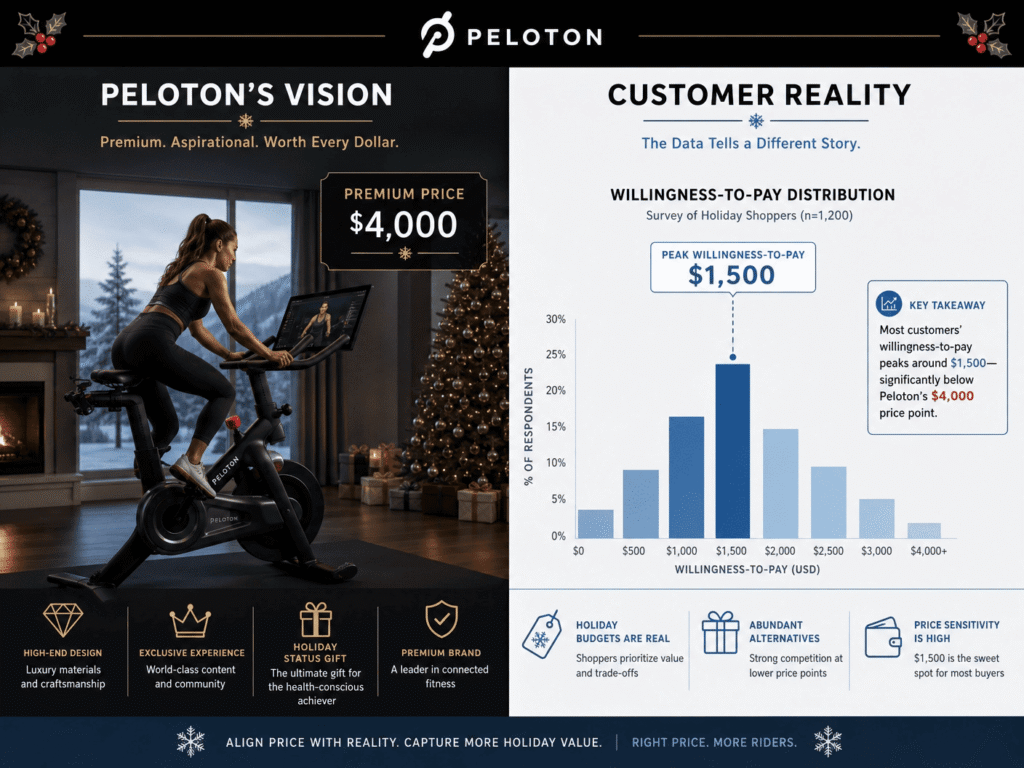
Here’s where Peloton’s strategic assumptions crumbled. CEO Stern had projected that 18% of existing customers would upgrade to premium equipment within six months, matching the Bike Plus adoption rate from 2021. Actual upgrade velocity was 6.7%—less than half the minimum threshold for profitability.
The company spent $47 million on upgrade incentive programs through Q4, offering trade-in credits and extended warranties. These programs generated only 23,000 premium upgrades—meaning Peloton paid roughly $2,043 in incentives per successful conversion. The unit economics were catastrophic.
International markets showed even weaker performance. European premium bike sales were down 31% compared to basic models, while the planned expansion into Southeast Asia was delayed indefinitely due to “market conditions.”
By February 5, 2026, the stock price reflected investor reality: shares dropped from $7.42 to $5.49 in a single session, wiping out $380 million in market value. The premium product failure relaunch had become a full-scale business crisis.
Part 4 — The Aftermath
The immediate aftermath revealed how deeply Peloton had miscalculated customer loyalty and economic resilience. Within 72 hours of the earnings announcement, the company announced a “strategic review” of its hardware portfolio—corporate speak for “we’re stopping premium production.”
CEO Peter Stern, who had joined from Apple in October 2024 with a mandate to premiumize the brand, faced his first major credibility test. The board’s confidence was shaken. Anonymous sources told Reuters that at least three board members questioned whether Stern understood Peloton’s customer base.
“He applied Apple’s playbook to a completely different market,” one board member was quoted as saying. “Peloton customers aren’t iPhone customers. They don’t upgrade on annual cycles.”
The Debt Reality
The failed premium pivot exposed Peloton’s underlying financial fragility. The company faces $1.1 billion in convertible debt maturity through 2026, with limited cash flow to service these obligations. Full-year 2026 revenue guidance dropped to $2.4-2.5 billion—a 2% decline in a market where competitors were growing.
Manufacturing partners began demanding cash payments instead of traditional credit terms. Production of AI-powered bikes was quietly reduced by 60%, leaving Peloton with $89 million in premium inventory that couldn’t move at full price.
The retail expansion strategy, which included opening 10 micro-stores in premium shopping centers, was immediately paused. Lease negotiations were terminated, resulting in $12 million in sunk costs.
Customer acquisition costs spiked 43% as the company pivoted marketing spend toward retention rather than premium upgrades. The lifetime value to acquisition cost ratio—historically Peloton’s strongest metric—deteriorated from 4.2:1 to 2.8:1.
The Talent Exodus
By March 2026, three senior executives had resigned, including the Chief Product Officer who had championed the AI integration strategy. Internal morale surveys showed employee confidence in leadership dropped 39% following the earnings miss.
The company initiated a hiring freeze and began evaluating acquisition scenarios with private equity firms specializing in consumer brand turnarounds.
Part 5 — The Transferable Lesson
Peloton’s premium product failure relaunch teaches three critical lessons that extend far beyond fitness equipment.
Lesson 1: Economic timing trumps feature innovation. The best technology means nothing if customers can’t afford it when you launch. Peloton had brilliant AI features—tracking cameras, voice control, immersive displays—but launched them during a discretionary spending contraction. Timing premium products requires reading economic signals, not just completing development cycles.
For founders and marketers: launch premium products during economic expansion, not contraction. If you must launch during difficult times, lead with value messaging, not feature complexity.
Customer Upgrade Patterns Aren’t Permanent
Lesson 2: Historical customer behavior doesn’t predict future willingness to pay. Peloton assumed 2021 upgrade patterns would repeat in 2025. They didn’t account for subscription fatigue, economic pressure, or market maturation. Customer loyalty doesn’t automatically translate to premium purchasing.
The deeper insight: companies must validate upgrade intent in real-time, not rely on historical conversion rates. Survey existing customers about willingness to pay before launching premium products; don’t assume past behavior predicts future spending.
Lesson 3: Premium repositioning requires customer preparation, not just product development. Successful premium pivots like Tesla’s Model S or Apple’s iPhone worked because customers were psychologically prepared to pay more for meaningful advances. Peloton tried to force premium positioning without preparing its customer base for higher price points.
The Subscription Saturation Reality
The broader lesson for the subscription economy is sobering. Customers are evaluating every recurring payment with increased scrutiny. Premium pivots work only when the value increase justifies the price increase—and when customers have disposable income to support upgrades.
This applies beyond fitness equipment. SaaS companies, streaming platforms, and subscription services should study Peloton’s failure before implementing price increases or premium tier launches.
For operators: test premium positioning with small customer segments before company-wide rollouts. Validate willingness to pay through customer interviews, not just usage metrics.

The ultimate lesson? Premium product repositioning fails when companies innovate past their customer base’s economic reality. Features don’t overcome affordability concerns. Timing matters more than technology. Customer research beats internal assumptions every time.
Frequently Asked Questions
What caused Peloton’s premium product failure relaunch to miss revenue expectations?
Peloton’s premium product failure relaunch missed revenue by $17.5 million because the company launched $4,000 AI bikes during economic headwinds when customers were cutting discretionary spending. The premium positioning strategy assumed existing customers would upgrade at 2021 rates, but actual upgrade velocity was 6.7% instead of the projected 18%.
How did Peloton’s stock price react to the failed premium relaunch?
Peloton’s stock plummeted 26% on February 5, 2026, dropping from $7.42 to $5.49 per share. The earnings miss wiped out $380 million in market value as investors realized the premium product failure relaunch had failed to generate expected revenue growth.
What were the key features of Peloton’s failed AI bike that customers rejected?
The AI bike featured tracking cameras for form correction, 360-degree immersive screens, and hands-free voice control. However, customers ranked these AI features eighth in priority surveys, preferring equipment durability and class variety instead. The premium product failure relaunch showed that feature innovation doesn’t overcome price resistance.
Why did Peloton’s premium product failure relaunch timing hurt sales?
Peloton launched premium equipment in September 2025 when household discretionary spending had contracted 4% year-over-year. The timing coincided with holiday budget planning and subscription fatigue, as customers were carrying 12.3 recurring subscriptions on average. This economic context made premium upgrades particularly unappealing.
What lessons can other companies learn from Peloton’s premium repositioning failure?
Companies should validate customer willingness to pay before launching premium products, especially during economic uncertainty. The premium product failure relaunch demonstrates that historical upgrade patterns don’t predict future behavior, and timing matters more than feature innovation when repositioning toward premium pricing.
How much debt does Peloton face following the premium product failure?
Peloton faces $1.1 billion in convertible debt maturity through 2026, with declining revenue making service payments more challenging. The premium product failure relaunch reduced cash flow expectations and forced the company to evaluate acquisition scenarios with private equity firms.