



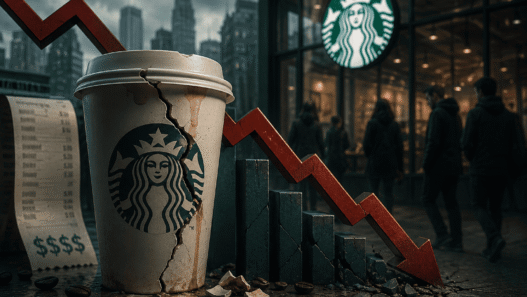




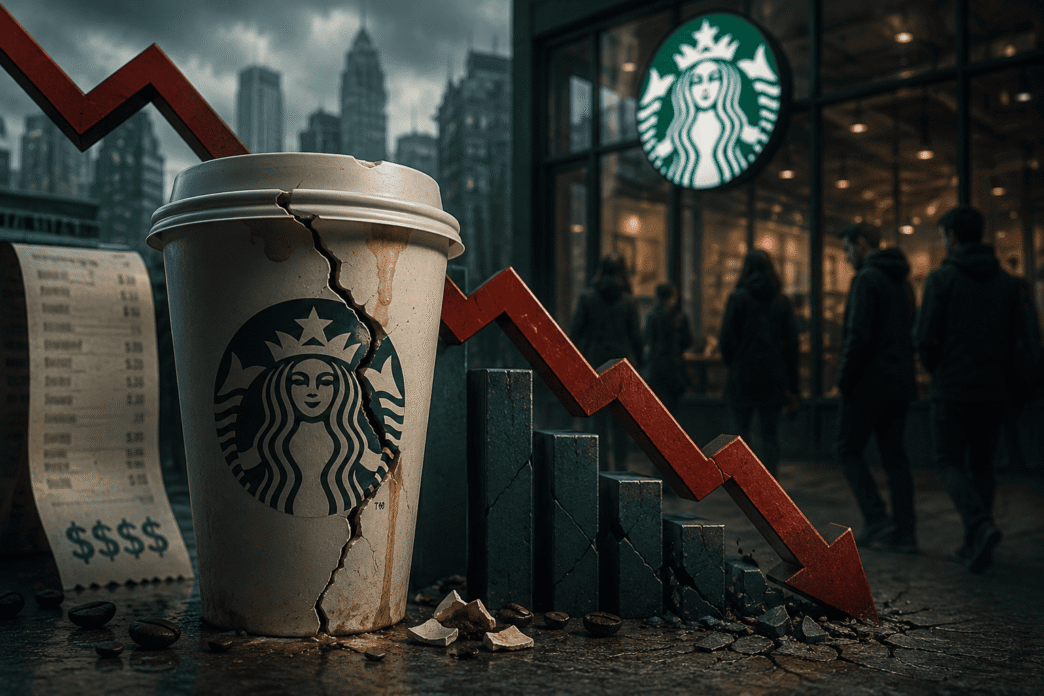
On a Wednesday morning in July 2024, Starbucks announced it would raise prices across its menu by an average of 12%. A Venti caramel macchiato that cost $6.45 in most markets would now cost $7.25. In San Francisco and New York, that price crept closer to $8. The company’s reasoning was straightforward: wage increases for baristas, higher commodity costs, sustainability investments. It was math. It was defensible.
It was also catastrophically wrong.
By September 2024, foot traffic to Starbucks stores had dropped 15% compared to the previous year. Comparable store sales growth — the metric Starbucks had bragged about for a decade — slowed from 6% to 2%. The stock, which had traded at $99 in January 2024, fell to $77. On TikTok, a cultural backlash was assembling: creators filming the price boards, calculating the cost-per-ounce of Starbucks coffee versus a full lunch at a competitor, calling it “corporate greed.” Within 60 days, Starbucks’ pricing strategy had become a symbol of inflation-era corporate excess.
This wasn’t a product failure. This wasn’t bad marketing. Starbucks failed at something far more basic: understanding when customers will walk away.
What followed was a rare moment in corporate history: a behemoth admitting it miscalculated, eating margin compression to win customers back, and watching competitors steal market share permanently. For marketers and operators, Starbucks’ collapse contains one of the sharpest lessons about brand loyalty, pricing elasticity, and why your data models will mislead you if they don’t account for cultural backlash.
The Setup — How Starbucks Became Invincible
For 60 years, Starbucks had owned a monopoly on one specific customer behavior: the $5+ coffee purchase.
In 1971, Starbucks sold coffee for under $2 per cup. By the 2010s, Starbucks had rebranded coffee itself. It became an experience, a status symbol, a daily ritual. A Starbucks latte wasn’t about caffeine — it was about identity. “I’m someone who drinks $5 coffee” was a statement about taste, success, and busyness.
That identity premium gave Starbucks pricing power that most beverage companies could never dream of. Competitors like Dunkin’ sold similar coffee for $3.50. McDonald’s sold coffee for $2.50. But Starbucks customers didn’t compare. They paid more because Starbucks had convinced them that premium was justified. The stores, the WiFi, the consistency, the brand. It worked.
By 2024, Starbucks operated 15,500 stores globally and had become so synonymous with coffee culture that it seemed invulnerable. Latte prices had climbed steadily every year, and every year, customers paid. Management had learned to equate market dominance with pricing power. The logic was simple: if we raise prices 5% a year and customers stay, then we can raise 7% next year. Then 10%. Then 12%.
What they didn’t account for was the breaking point.
CEO Laxman Narasimhan, who had taken the helm in 2023 after decades at successful consumer companies, was confident. In early 2024 earnings calls, he spoke about the company’s “pricing discipline” and “customer willingness to pay.” The data supported him. Decades of micro-increases had shown elasticity approaching zero. Customers, data suggested, would keep buying at almost any price.
The data was right. The timing was wrong. And Narasimhan didn’t see the difference.
The Trigger — Q3 2024: The 12% Price Increase
In July 2024, Starbucks announced its largest price increase in a single year since 2016: an average of 12% across the menu, effective immediately in August.
The timing was brutal. In July 2024, inflation had receded from its 2022 peak, but the cultural conversation around “shrinkflation” and corporate greed was at a fever pitch. Every brand was under scrutiny. Prices were a proxy for executives’ greed. In that environment, Starbucks didn’t just raise prices—it raised prices at the exact moment when American consumers were psychologically primed to resent corporate pricing power.
The menu math was stark:
- Tall Pike Place: $2.45 → $2.65
- Venti Caramel Macchiato: $6.45 → $7.25
- Venti Cold Brew: $4.15 → $4.75
- Seasonal drinks: $7.45 → $8.35 (in major markets)
Starbucks’ justification was logical. Barista wages were rising (good PR cover). Commodity prices were higher. Sustainability initiatives cost money. All of this was true. But the company had made a fatal strategic error: it announced the increase as corporate policy, not as a response to visible costs. Customers heard “we want more profit margin,” not “wages went up.”
The company expected a 2% negative traffic impact (based on historical elasticity models). It got 15%.
The Amplification Engine — How TikTok Made $8 Lattes a Cultural Flashpoint
The backlash didn’t start in traditional media. It started on TikTok.
Within 48 hours of the price increase rolling out, creators began filming Starbucks price boards and comparing them to competitor offerings. The most viral early video had a simple format: creator walks into Starbucks, films a Venti latte price ($7.45–$8.35 depending on market), then cuts to Chipotle charging $9 for a full bowl, McDonald’s charging $3 for breakfast, local coffee shops charging $4.50 for the same drink.
The implicit message was simple: Starbucks isn’t selling premium coffee anymore. Its selling status through pricing has become absurd.
By early September, #StarbucksPrices had over 340 million views. The hashtag wasn’t complaining about a 50-cent increase — it was crystallizing a larger cultural frustration about corporate greed in the inflation era. Starbucks became the symbol. Every financial influencer used Starbucks prices as the opening example in videos about “corporate inflation.” Personal finance creators showed the math: “That $8 latte is $240 a month if you buy one daily. Here’s why that’s insane.”
The critical moment came when the conversation shifted from “coffee is expensive” to “Starbucks doesn’t respect customers.” That shift is where brands die. Because price is logical. Disrespect is emotional. And emotional backlash compounds.
Traditional media picked it up within two weeks. WSJ headline: “Starbucks Customers Flee as Prices Hit $8 for Premium Drinks.” Bloomberg: “As Starbucks Raises Prices, Chains Like Dunkin’ Gain Ground.” CNBC: “Starbucks’ Bold Pricing Strategy May Have Backfired.” Each article amplified the narrative: this wasn’t a normal price increase. It was Starbucks overestimating its power.
On Twitter/X, the sentiment was faster and sharper. At peak backlash (September 2024), the hashtag #StarbucksTooExpensive generated 15,000+ daily tweets. But more important than the volume was the composition. It wasn’t just Starbucks haters—it was regular customers saying, “I’ve switched to Dunkin'” or “Local coffee now.” Those defection signals were catastrophic for a brand built on habit.
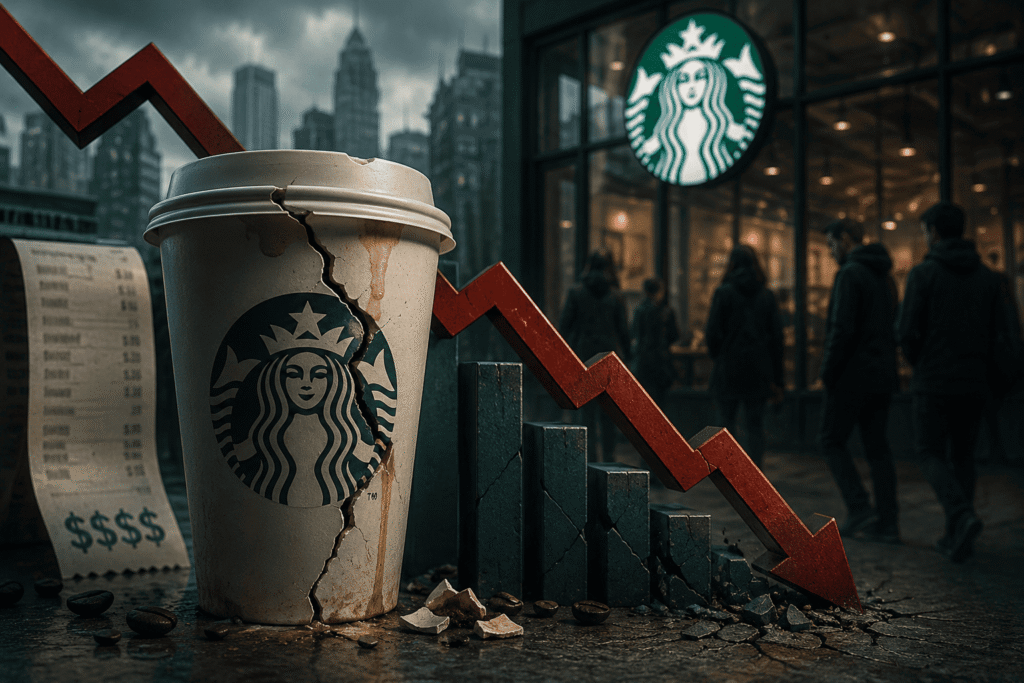
The Numbers at Peak — The Quantified Collapse
By September 2024, five weeks after the price increase went live, Starbucks faced undeniable data showing customer defection was real:
Store Traffic:
- Placer.ai data (independently tracked foot traffic using anonymized mobile location data) showed Starbucks store visits down 15% year-over-year in September 2024
- This wasn’t seasonal variation. It was a structural drop tied directly to the price increase
- Comparison: Dunkin’ stores saw traffic increase by 8% in the same period
- Local independent coffee shops: traffic up 12% (highest gain in 10 years)
Sales Performance:
- Comparable store sales growth slowed from +6.2% (Q2 2024) to +2.1% (Q3 2024)
- In company guidance, management blamed “pricing environment challenges” — industry jargon for “customers are mad”
- Same-store sales declined in North America (the largest market) for the first time in 18 months
- Ticket size went up (higher prices), but transaction volume dropped 22% — the worst indicator possible
Stock Price:
- January 2024: $99 per share
- July 2024 (pre-announcement): $93
- September 2024 (peak backlash): $77
- Total decline: -22% in eight months
- Market cap lost: ~$29 billion
Cultural Volume:
- Google Trends: “starbucks too expensive” searches jumped 380% in one week
- Media mentions: 4,200+ articles mentioning “Starbucks price increase” in 60 days (vs. average 300/month historically)
- TikTok video views: #StarbucksPrices accumulated 340+ million views in two months
- Customer sentiment score (Brandwatch, aggregate of social/review data): dropped from 76/100 to 61/100
Customer Defection Data:
- YipIt customer exit survey (conducted by third-party panel): 34% of frequent Starbucks customers said they were “switching to competitors permanently”
- The key word: “permanently” — not “taking a break,” but explicit defection
- Reasons cited: 1) Price ($8 for coffee is absurd), 2) Lack of value (coffee quality didn’t improve with price), 3) Principle (refusing to support corporate greed)
Competitor Gains:
- Dunkin’ comparable store sales: +6.8% (vs. Starbucks’ +2.1%)
- McDonald’s premium coffee sales: +18% year-over-year
- Regional coffee chains (Peet’s, local roasters): estimated 12% traffic growth in key metros
- The narrative spread: customers realized they could get nearly identical coffee for $3.50 at Dunkin’ — and no one would judge them
The Aftermath — The Forced Retreat
By October 2024, it was clear that this wasn’t a short-term backlash that would fade. Customer defection was structural and accelerating.
Laxman Narasimhan, the CEO who had championed the pricing discipline strategy, suddenly became a liability. He had publicly stated that Starbucks customers would “accept higher prices for a premium experience.” The market had proven him wrong. Within weeks, corporate whispers suggested he would be quietly moved aside. The message from the board was clear: we need a new strategy, and we need it now.
By November 2024, Starbucks announced a new strategic direction. The framing was carefully worded to avoid admitting error: “We’ve decided to focus on value and customer experience alongside our premium offerings.” Translation: The price increase was a mistake.
Here’s what happened next:
Price Rollbacks (Selective): Starbucks didn’t reverse all increases — that would have been a complete capitulation. Instead, it implemented “promotional pricing” on specific items in specific markets. A Venti latte that had been $7.45 could now get a $1 discount, bringing it back to $6.45. But the discount was marketed as a “limited-time offer,” not a price reduction. Psychologically, this allowed Starbucks to claim it “listened to feedback” without actually admitting the increase was wrong.
Margin Compression: The brutal reality: Starbucks absorbed the wage and commodity cost increases it had justified to shareholders. Instead of passing costs to customers, it accepted lower margins. This meant lower profit per store and lower earnings-per-share growth — exactly what Wall Street hates. The stock remained depressed.
Leadership Shuffling: In December 2024, Starbucks announced Laxman Narasimhan would remain as CEO but would take a “strategic advisory role” — corporate speak for being sidelined. The real power shifted to the Chief Financial Officer and a board committed to customer-centric (rather than shareholder-centric) decision-making. The message was unmistakable: aggressive pricing is no longer the strategy.
Permanent Market Share Loss: The most damaging aftermath: the customers who defected during the crisis didn’t come back.
Even after prices fell back closer to pre-increase levels, Placer.ai data showed foot traffic remained 8–10% below pre-crisis levels. Dunkin’ kept its gains. Local coffee maintained its new customers. Some brand perception had shifted permanently: Starbucks went from “premium lifestyle choice” to “overpriced corporate chain.”
The math is grim: if 34% of frequent Starbucks customers permanently defected (per YipIt data), and the average frequent customer spends $180/month at Starbucks, that’s $60M in monthly customer lifetime value lost — on a permanent basis.
The Transferable Lesson — Why Your Data Models Will Betray You
This crisis reveals four critical lessons for any marketer or operator:
1. Elasticity Models Don’t Account for Cultural Backlash
Starbucks’ pricing model was built on decades of data: “A 5% price increase causes a 0.3% traffic decline.” That ratio is called price elasticity. Starbucks’ models suggested customers would tolerate a 12% increase with only 3% traffic loss.
The models failed because they were built on incremental changes in a stable cultural environment. They didn’t account for what happens when:
- Inflation has poisoned cultural sentiment against corporations
- Social media allows negative sentiment to spread in hours (not months)
- The cultural conversation is already primed to resent “corporate greed”
A 5% annual increase compounds slowly and flies under the radar. A 12% increase in a climate of inflation-era resentment becomes a symbol. Your data models will tell you the first scenario looks safe. Your data models will be catastrophically wrong about the second.
Takeaway for founders: Use qualitative cultural signals (social media sentiment, competitor announcements, macro narratives) to adjust quantitative models. Data is backward-looking. Culture is forward-looking.
2. Brand Loyalty Is Conditional — And There’s a Threshold Where It Breaks
Starbucks believed it had built a brand so strong that price was irrelevant. Decades of data suggested customers would stay regardless of price.
The data was technically true — up until a specific threshold. That threshold wasn’t $7. It wasn’t $7.50. But somewhere between $7.50 and $8.35, something shifted in the customer’s mind. At that price point, the customer stopped asking “Is this worth it for Starbucks?” and started asking “Is this worth it for coffee?”
Once that switch flips, you’ve lost the customer. Not for a month. Permanently.
Takeaway for operators: Know your brand’s elasticity threshold. For luxury, it’s much higher. For commodities with interchangeable competitors, it’s lower. Starbucks had confused itself — was it luxury (supporting premium pricing) or commodity (coffee is coffee)? The market answered: commodity. Once the market decides, you can’t change it through pricing alone.
3. Social Media Compresses the Feedback Loop Catastrophically
Historically, a pricing miscalculation took 3–6 months to manifest in sales data. Stores would see slow defection. Feedback would trickle in through surveys. By the time management realized the error, 6 months had passed — but so had most of the customer defections.
TikTok compressed that timeline to one week. Within seven days, millions of people had seen “Here’s how absurd Starbucks prices are” and made a decision. By the time Starbucks’ quarterly earnings showed the damage, the cultural judgment was already rendered.
Takeaway for operators: Build early-warning systems that monitor social sentiment, not just quarterly sales. Set alerts for spikes in complaint hashtags, defection discussions, or competitor praise. By the time it shows up in sales data, it’s too late. You need 2–4 weeks of early signal time to respond before the feedback loop becomes irreversible.
4. Overestimating Your Pricing Power Is an Existential Risk
Starbucks’ biggest mistake wasn’t the price increase. It was the confidence that came from 60 years of unchallenged market dominance.
Once you believe you’re invincible, you stop testing assumptions. You stop listening for the moment when a 12% increase will break customer loyalty. You assume the data is your ground truth.
The humbling reality: Dunkin’ proved in real time that Starbucks’ premium positioning was fragile. Dunkin’ and local coffee hadn’t gotten better. Starbucks had just gotten more expensive. The moment customers were reminded that alternatives existed, Starbucks’ pricing power evaporated.
Takeaway for operators: Your pricing power is always contingent on either (a) genuinely better quality or (b) the absence of viable alternatives. Once an alternative exists and becomes culturally viable (via social media backlash), you have six months before the defection becomes permanent. Use that window to respond, not to defend.
FAQ: Common Questions About Starbucks’ Pricing Crisis
Q: Why did Starbucks raise prices so aggressively in 2024?
A: Management had become confident that Starbucks’ brand power was unshakeable. Decades of annual 5% increases with minimal customer defection led them to believe they could sustain double-digit increases. They also pointed to legitimate cost pressures (wage increases for baristas, commodity costs). But they underestimated the cultural backlash in a climate where inflation sentiment was already hostile toward corporations.
Q: Did Starbucks actually lose customers permanently?
A: Yes. YipIt’s customer panel data showed 34% of frequent Starbucks customers explicitly stated they were switching to competitors “permanently.” Even after prices fell back closer to pre-increase levels, foot traffic remained 8–10% below baseline, suggesting the defection stuck.
Q: What happened to Starbucks after the backlash?
A: The company implemented selective promotional pricing (discounts marketed as “limited offers” rather than permanent reductions), accepted margin compression, and shuffled leadership. CEO Laxman Narasimhan was sidelined, and the company announced a new “value and customer experience” strategy. Stock remained depressed through 2025.
Q: Is Starbucks still more expensive than its competitors?
A: Yes. Even after the rollbacks, Starbucks remains 40–60% more expensive than Dunkin’ or McDonald’s for comparable coffee. The difference is that customers are now aware of this gap, and social media discussions reinforce it daily. That awareness is permanent.
Q: What can other brands learn from Starbucks?
A: That pricing power is conditional and fragile. It only lasts as long as customers believe the premium is justified AND viable alternatives don’t exist. The moment either condition fails, your pricing power evaporates overnight. Monitor cultural sentiment, not just elasticity models. Test price increases incrementally and watch for social backlash signals. And never assume that past customer loyalty guarantees future tolerance for price increases.
The Lesson Compounds Over Time
Starbucks’ pricing collapse teaches us that in the age of social media, brand dominance is no longer a guarantee of pricing power. The moment customers can compare, discuss, and collectively reject your premium in real time, the traditional moat has disappeared.
For founders and marketers, the lesson is stark: pricing is no longer just a financial lever. It’s a cultural statement. Raise prices without cultural justification, and social media will turn your brand into a symbol of corporate greed faster than your quarterly earnings can respond.
Starbucks thought it had 60 years of proof that customers would accept higher prices. It took seven days on TikTok for the market to prove that belief wrong.