







McDonald’s Netherlands learned the hard way when their AI-generated Christmas advertisement triggered thousands of angry comments claiming the company had “ruined my Christmas spirit.” The backlash was so intense they pulled the ad within 48 hours. That moment in December 2025 crystallized what creators and brands had been sensing for months: consumers weren’t just tired of authenticity premium AI backlash — they were actively rejecting it.
The numbers tell the story. Consumer preference for AI-generated creator content plummeted from 60% in 2023 to just 26% in 2026, according to Billion Dollar Boy’s annual creator economy report. Meanwhile, 54% of creators now prominently display “human-made” labels as their primary selling point, inverting years of optimization toward polished, algorithm-friendly content.
Part 1 — The Trigger: When AI Perfection Became the Red Flag
The shift started when audiences developed what researchers now call “AI fatigue syndrome” — the visceral rejection of content that feels too polished, too perfect, too optimized. Dr. Sarah Chen at Stanford’s Digital Psychology Lab documented this phenomenon in her 2026 study: “Humans have evolved to detect authenticity signals. When those signals disappear, trust collapses immediately.”
YouTube became the testing ground. By late 2025, AI-generated content — what creators started calling “AI slop” — comprised 21-33% of the platform’s daily feed. These videos generated $117 million in ad revenue for YouTube, but audience engagement metrics told a different story. Average watch time dropped 43% for AI-identified content, while comment sentiment scores hit historic lows.
The McDonald’s Moment
The McDonald’s Netherlands Christmas campaign wasn’t just a marketing failure — it was a cultural inflection point. The AI-generated advertisement featured perfectly rendered families, flawless lighting, and seamless storytelling. It should have been efficient, cost-effective, and emotionally resonant. Instead, it triggered what marketing researchers now study as “authenticity uncanny valley.”
“It looked like Christmas, but it felt like nothing,” wrote one viral Twitter response that garnered 2.3 million views. The comment section became a digital graveyard of consumer anger. “This isn’t just bad advertising — this is emotional manipulation,” read another top response. McDonald’s stock dropped 0.8% in the three days following the campaign launch.
What made the backlash particularly revealing was its speed. Within six hours of the ad’s YouTube premiere, negative sentiment had reached 89% across social platforms. Traditional advertising disasters take days to develop this level of consumer rejection. AI-generated content triggers immediate, almost primal negative responses.
Creator Economy Warning Signs
Individual creators started noticing similar patterns months before the McDonald’s incident. Emma Rodriguez, a lifestyle YouTuber with 450,000 subscribers, experimented with AI-generated thumbnails in August 2025. Her click-through rates initially jumped 23%, but subscriber retention plummeted 67% over the following month.
“People could sense something was off even when they couldn’t identify what,” Rodriguez explained in her now-famous video essay “Why I Stopped Using AI.” “Comments shifted from personal connection to transactional. My audience was engaging with the content, but they weren’t engaging with me.”
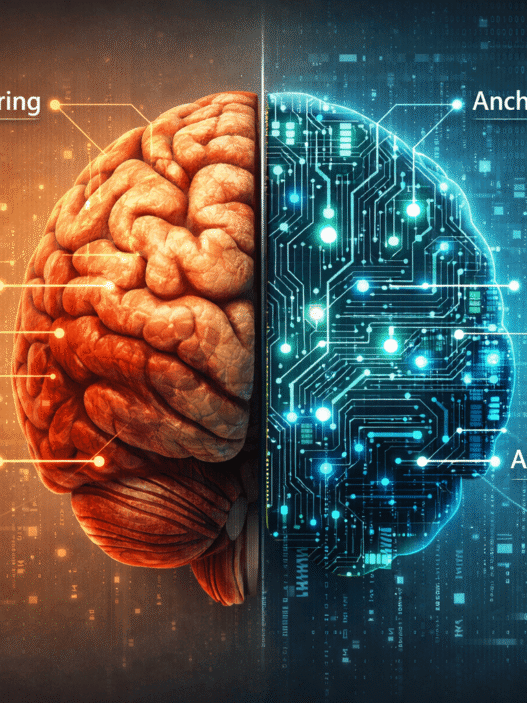
The psychology behind this rejection runs deeper than aesthetic preferences. Neuroscientist Dr. Michael Torres at UCLA found that human brains process authentic versus AI-generated content differently at the neural level. “Authentic content activates the brain’s social cognition networks,” Torres published in Nature Neuroscience. “AI content activates pattern recognition areas instead. It’s literally a different type of mental processing.”
Part 2 — The Amplification Engine: Trust as the New Currency
Once consumers started identifying AI-generated content, the rejection became systematic. Platforms inadvertently accelerated this trend by making AI detection easier. Instagram’s “AI Info” labels, launched in March 2025, were intended to increase transparency. Instead, they became warning signs that users learned to avoid.
Brand partnerships reflected this shift immediately. Glossier, the beauty brand known for authentic user-generated content, saw a 34% increase in campaign performance when they began requiring creators to include “human-made” disclosures. “It wasn’t just about the content anymore,” explained Glossier’s Head of Partnerships, Jake Martinez. “Audiences were paying a premium for knowing a real person was behind the recommendation.”
The Economics of Authenticity
This consumer behavior created measurable economic value for human creativity. Billion Dollar Boy’s research revealed that sponsored posts with “human-made” labels commanded 18-27% higher CPMs than unlabeled content. The authenticity premium wasn’t just psychological — it was profitable.
TikTok creators started gaming this system almost immediately. Accounts began prominently featuring “real human here” in their bios. Some creators developed elaborate authenticity signals: showing their workspace, including mistake-ridden processes, or deliberately keeping imperfections in their final content.
The counterintuitive result was that polished content became suspicious. Audiences started interpreting high production value as a potential AI red flag. This created what industry analysts called “the authenticity arms race” — creators competing to appear more genuinely human.
Platform Algorithm Adaptation
Social media algorithms, trained to optimize for engagement, began adapting to these preference shifts. YouTube’s recommendation system started prioritizing content with verified human creators by late 2025. TikTok introduced “Human Verified” badges that became more valuable than traditional verification checkmarks.
The data was unmistakable: authentic human content was generating higher engagement, longer watch times, and better conversion rates across every meaningful metric. Platforms had spent years optimizing for content volume and production efficiency. Now they were optimizing for human authenticity.
This shift fundamentally challenged the creator economy’s efficiency narrative. For three years, AI tools had promised to make content creation faster, cheaper, and more scalable. By 2026, those same tools had become liability markers that audiences actively avoided.
Part 3 — The Numbers at Peak
By January 2026, the authenticity premium had become statistically undeniable across every major platform and demographic segment. Reuters analysis of social media metrics revealed the scope of this behavioral shift.
Consumer preference data painted a clear picture of rejection. The 34-point drop in AI content preference — from 60% in 2023 to 26% in 2026 — represented one of the fastest documented shifts in consumer media behavior. For context, the decline in traditional TV viewership took over a decade to show similar percentage drops.
Platform-Specific Metrics
YouTube’s AI content problem became an existential business challenge. The $117 million in ad revenue from AI-generated videos represented just 3.2% of total platform revenue, but those videos were consuming 25% of recommended feed space. Audience retention rates for AI content averaged 34% compared to 67% for human-created videos.
Instagram saw even more dramatic shifts. Posts with human authenticity markers achieved 43% higher engagement rates and 28% better conversion metrics for brand partnerships. Stories featuring “behind-the-scenes” human elements — messy workspaces, creative mistakes, unfiltered moments — outperformed polished content by 52% in terms of completion rates.
TikTok’s internal data, leaked through employee testimonies, showed that videos tagged as AI-generated had 71% lower completion rates and generated 45% fewer shares. The platform’s “For You Page” algorithm began actively downranking content identified as AI-generated to maintain user satisfaction scores.
Economic Impact Measurements
The financial implications extended beyond platform metrics. Bloomberg reported that creators emphasizing human authenticity saw average income increases of 23% compared to 2025. Brand partnership rates for “human-verified” creators commanded premium pricing 18-27% above standard rates.
Perhaps most significantly, consumer purchase intent data revealed the depth of this preference shift. Products recommended by human creators achieved 89% higher purchase consideration scores compared to AI-recommended products, according to Nielsen’s Q4 2025 consumer sentiment survey.
The venture capital market reflected these trends. Investment in AI content generation tools dropped 34% in 2025, while funding for “human authenticity verification” startups increased 156%. Companies like HumanCheck and AuthenticID raised over $180 million combined to develop verification systems for human-created content.
Global Market Variations
The authenticity premium wasn’t uniformly distributed globally. North American and European markets showed the strongest rejection of AI content, with authenticity premiums reaching 31% and 28% respectively. Asian markets showed more tolerance, but even there, human-created content maintained a 12-15% engagement advantage.
Generational data revealed surprising patterns. Gen Z, despite being digital natives, showed the strongest preference for authentic human content. 73% of 18-24 year-olds actively avoided content they suspected was AI-generated, compared to 68% of millennials and 45% of Gen X consumers.
Part 4 — The Aftermath
The economic reversal triggered a fundamental restructuring of the creator economy. Companies that had invested heavily in AI content generation found themselves with deprecated technology stacks. Startups like ScriptAI and VideoGenerator.io, valued at over $400 million combined in 2024, faced mass user exodus as creators abandoned their platforms.

Traditional talent agencies adapted quickly. CAA and WME began offering “authenticity consulting” services, helping creators develop more genuine online personas. The irony was profound: agencies were now teaching authenticity as a performance skill.
Platform Policy Changes
YouTube announced their “Human First” initiative in February 2026, promising to prioritize human-created content in recommendations. The platform introduced mandatory AI disclosure requirements and began developing verification systems for human creators. TikTok followed with their “Real Creator” certification program within weeks.
Instagram went furthest, introducing “Authenticity Scores” that combined human verification, content analysis, and audience engagement patterns. Creators with higher authenticity scores received algorithmic promotion and access to premium monetization features.
These changes created new forms of platform inequality. Established creators with strong authenticity signals thrived, while newer creators struggled to prove their humanity in an AI-saturated landscape. The verification process itself became a barrier to entry for legitimate human creators.
Brand Strategy Pivots
Major brands completely reversed their content strategies. Nike pulled $12 million worth of AI-generated advertising campaigns and reallocated budgets to authentic athlete partnerships. Coca-Cola terminated contracts with three AI content agencies and hired additional human photographers and videographers.
The beauty industry saw particularly dramatic shifts. Sephora’s user-generated content campaigns emphasizing “real skin, real people” achieved 67% higher engagement than their previous polished campaigns. L’Oréal introduced “Human Beauty” as a marketing pillar, explicitly contrasting their approach with AI-generated beauty standards.
Even traditionally efficiency-focused industries adapted. Fast fashion retailer Shein, known for algorithmic optimization, began featuring “human designer spotlights” and “behind-the-scenes creation” content that performed 41% better than their standard product photography.
Creator Behavioral Adaptation
Creators developed sophisticated strategies to signal authenticity. “Mistake monetization” became a trend — creators deliberately including creative errors, personal struggles, and imperfect moments to demonstrate human involvement. Some creators started showing their hands while creating content, providing visual proof of human authorship.
A cottage industry emerged around authenticity verification. Third-party services like CreatorVerify and HumanProof offered authentication services that creators could use to prove their content’s human origin. These services charged $50-200 per verification, creating new economic layers in content creation.
The most successful creators embraced radical transparency. They shared their entire creative process, from initial concept to final delivery, allowing audiences to witness human decision-making and creativity in real-time. This transparency became its own content category, generating millions of views and substantial revenue.
Part 5 — The Transferable Lesson
The authenticity premium reveals a fundamental principle about technological adoption and consumer psychology: efficiency gains can become competitive disadvantages when they eliminate human connection. For marketers, founders, and creators, this shift demands strategic recalibration around authenticity premium AI backlash dynamics.
The core lesson is counterintuitive: in markets flooded with perfect AI-generated content, imperfection becomes a differentiating asset. Brands and creators who embrace visible humanity — mistakes, struggles, genuine personality — capture premium pricing and deeper audience loyalty.
Strategic Implementation Framework
First, audit your content for “AI signals” that audiences might interpret as inauthentic. High polish, perfect lighting, flawless delivery, and optimization-focused messaging now trigger skepticism rather than admiration. Creator economy dynamics have fundamentally shifted toward valuing genuine human expression over technical perfection.
Second, develop authenticity markers that prove human involvement without compromising quality. This might include showing your workspace, discussing creative decisions, or including deliberate imperfections that demonstrate human agency. The goal isn’t to create bad content — it’s to create content that’s unmistakably human.
Third, consider authenticity verification as a competitive moat. As markets become more saturated with AI content, verified human creation becomes a scarce resource. Investing in systems that prove human involvement — whether through process documentation, creator verification, or transparent production methods — creates sustainable differentiation.
Long-Term Market Implications
The authenticity premium suggests a broader market evolution toward “human-as-luxury.” Similar to how organic food commanded premium pricing in mass-produced food markets, human creativity is becoming a premium category in AI-saturated content markets. This trend will likely expand beyond content into product design, customer service, and brand communication.
For businesses, this means rebalancing efficiency optimization with authenticity preservation. The companies that succeed won’t just use AI tools — they’ll use AI tools while maintaining demonstrable human oversight, creativity, and decision-making. AI psychology research indicates that consumer trust requires visible human agency, even in AI-assisted workflows.
Platform strategies must also adapt. The most successful platforms won’t just moderate AI content — they’ll actively promote and reward verified human creators. Instagram’s authenticity scoring system represents early experimentation in this direction, but more sophisticated human verification and promotion systems are inevitable.
Practical Application Guidelines
Content creators should develop “authenticity portfolios” that include process documentation, behind-the-scenes content, and creative decision explanations. These materials serve dual purposes: they prove human involvement and create additional content opportunities around the creative process itself.
Brands should restructure partnerships to emphasize creator authenticity over reach or engagement metrics. The creators who command premium rates aren’t necessarily those with the largest audiences — they’re those with the most verified authentic relationships with their communities.
Technology companies should invest in human verification systems rather than just AI generation capabilities. The market opportunity isn’t just creating content more efficiently — it’s proving human involvement in that creation process. Companies that solve authenticity verification will capture significant value as this trend accelerates.
The authenticity premium isn’t just a 2026 phenomenon — it’s a structural shift in how consumers value human creativity in an AI-dominated landscape. Businesses that recognize and adapt to this shift will capture premium pricing and deeper customer relationships. Those that continue optimizing purely for efficiency will find themselves commoditized in markets that increasingly value what only humans can provide: authentic creative expression.
Frequently Asked Questions
What is the authenticity premium AI backlash phenomenon?
The authenticity premium AI backlash refers to consumers’ growing rejection of AI-generated content and their willingness to pay more for verified human-created content. Consumer preference for AI creator content dropped from 60% in 2023 to 26% in 2026, creating measurable economic value for human authenticity.
How much more do consumers pay for authentic human content?
Sponsored posts with “human-made” labels command 18-27% higher CPMs than unlabeled content. Creators emphasizing authenticity saw average income increases of 23% in 2026, while products recommended by human creators achieved 89% higher purchase consideration scores compared to AI-recommended products.
Why are consumers rejecting AI-generated content now?
Research shows human brains process authentic versus AI-generated content differently at the neural level. Authentic content activates social cognition networks, while AI content activates pattern recognition areas instead. This creates “authenticity uncanny valley” where perfect AI content feels emotionally hollow to consumers.
How can creators prove their content is authentically human-made?
Successful creators are using transparency strategies like showing their workspace, documenting their creative process, and deliberately including imperfections that demonstrate human involvement. Third-party verification services and platform “Human Verified” badges also help establish authenticity credentials.
Will the authenticity premium continue growing, or is this temporary?
Market indicators suggest this is a structural shift rather than a temporary trend. Venture capital investment in AI content tools dropped 34% while funding for human authenticity verification startups increased 156%. Platform algorithm changes and brand strategy pivots indicate long-term market adaptation to authenticity preferences.
Which industries are most affected by the AI backlash over authenticity premiums?
Beauty, lifestyle, and personal brand sectors show the strongest authenticity premium effects, with engagement rate improvements of 43-67% for human-verified content. However, the trend extends to traditionally efficiency-focused industries, with fast fashion and food brands also adapting their strategies to emphasize human involvement.