





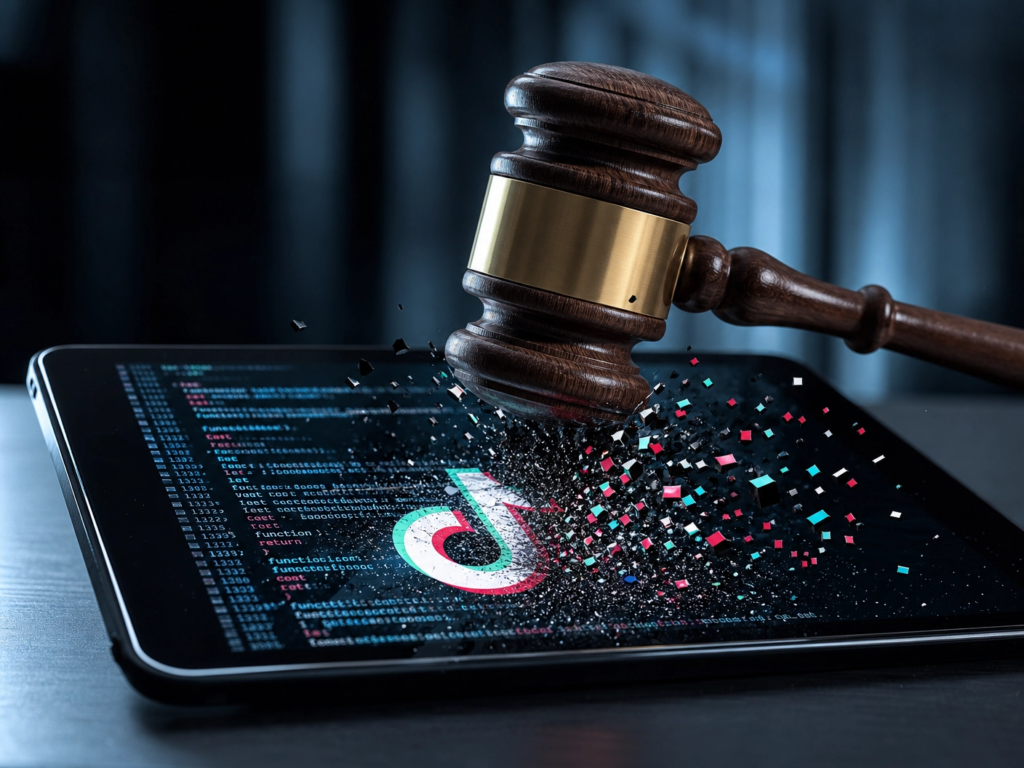
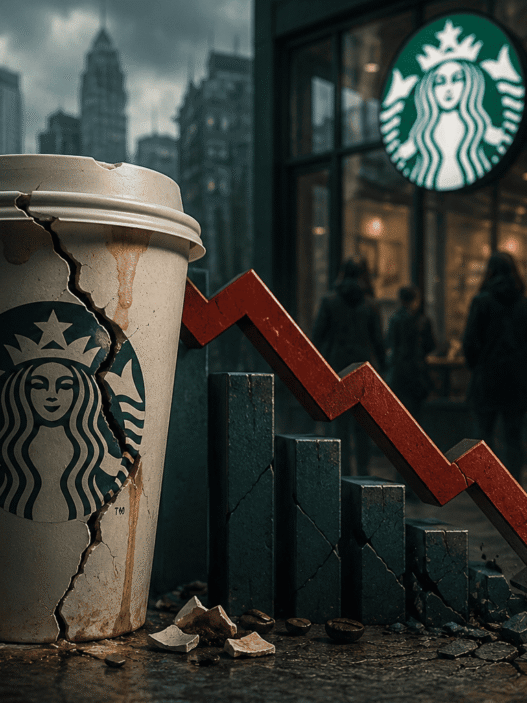
For approximately 14 hours on January 19, 2025, TikTok went dark in the United States. The app vanished from the Apple App Store and Google Play Store. Existing users who opened the app saw a message explaining the service was unavailable due to a law requiring ByteDance to divest TikTok or face a ban.
170 million American users woke up to find the most-used app in the country simply gone.
Then, 14 hours later, it came back — sort of. The TikTok ban 2025 is one of the most dramatic, confusing, and unresolved platform stories in internet history. Here is the complete autopsy of what happened, why it happened, and what it means for the future of social media in America.
The Background: Why the TikTok Ban 2025 Was Years in the Making
To understand the TikTok ban 2025, you need to go back to 2020, when the Trump administration first attempted to ban TikTok by executive order, citing national security concerns over its Chinese parent company, ByteDance.
The core concern was data. TikTok collects an extraordinary amount of information on its users — location, browsing habits, facial data, behavioral patterns, and, through its algorithm, an increasingly precise psychological profile of every person who uses it. American intelligence officials argued this data could be accessed by the Chinese government under China’s national security laws, which effectively require Chinese companies to cooperate with government intelligence requests.
ByteDance disputed this. TikTok invested $1.5 billion in a project called “Project Texas” — storing all American user data on servers run by Oracle in the United States, with independent auditing of algorithm access. ByteDance’s Project Texas commitments are detailed in filings reviewed by The Wall Street Journal, which has covered the national security debate around TikTok more extensively than any other publication.It argued that this structure made access to the Chinese government impossible in practice.
The 2020 ban attempt was blocked by the courts. But the concern did not go away.
In April 2024, President Biden signed the Protecting Americans from Foreign Adversary Controlled Applications Act — a law that gave ByteDance a 270-day deadline to either sell TikTok’s US operations to a non-Chinese buyer or face a nationwide ban. The deadline was January 19, 2025.
ByteDance did not sell. The ban took effect.
Part 1 — The Trigger: January 19, 2025
The TikTok ban 2025 trigger was precise and immediate.
At approximately 11:59 pm EST on January 18, 2025, TikTok and its sister app CapCut disappeared from US app stores. Users who had already downloaded the app saw a shutdown message when they tried to open it. The message read: “A law banning TikTok has been enacted in the US. Unfortunately, that means you can’t use TikTok for now.”
The shutdown happened because the law required not just ByteDance to comply — it required Apple and Google to remove TikTok from their app stores or face fines of $5,000 per user, which at 170 million users would have amounted to $850 billion in potential liability. Apple and Google had no choice but to comply.
Web hosting companies and app distribution networks received similar notices.
For 14 hours, TikTok was effectively banned in the United States.
Then Donald Trump, who was to be inaugurated as President the following day, announced on Truth Social that he would issue an executive order on his first day in office instructing the Justice Department not to enforce the law. He later claimed he had spoken with ByteDance executives.
Within hours of Trump’s announcement, TikTok services began restoring. The app reappeared. By January 20, 2025 — Inauguration Day — TikTok was functional again for US users, though still technically operating in a legally ambiguous status.
Part 2 — The Amplification Engine: How 14 Hours Changed Everything
The 14-hour TikTok ban 2025 shutdown revealed something nobody had fully appreciated before: how deeply dependent the American creator economy and small business community had become on a single platform owned by a foreign company.
The amplification of the crisis happened simultaneously across four groups.
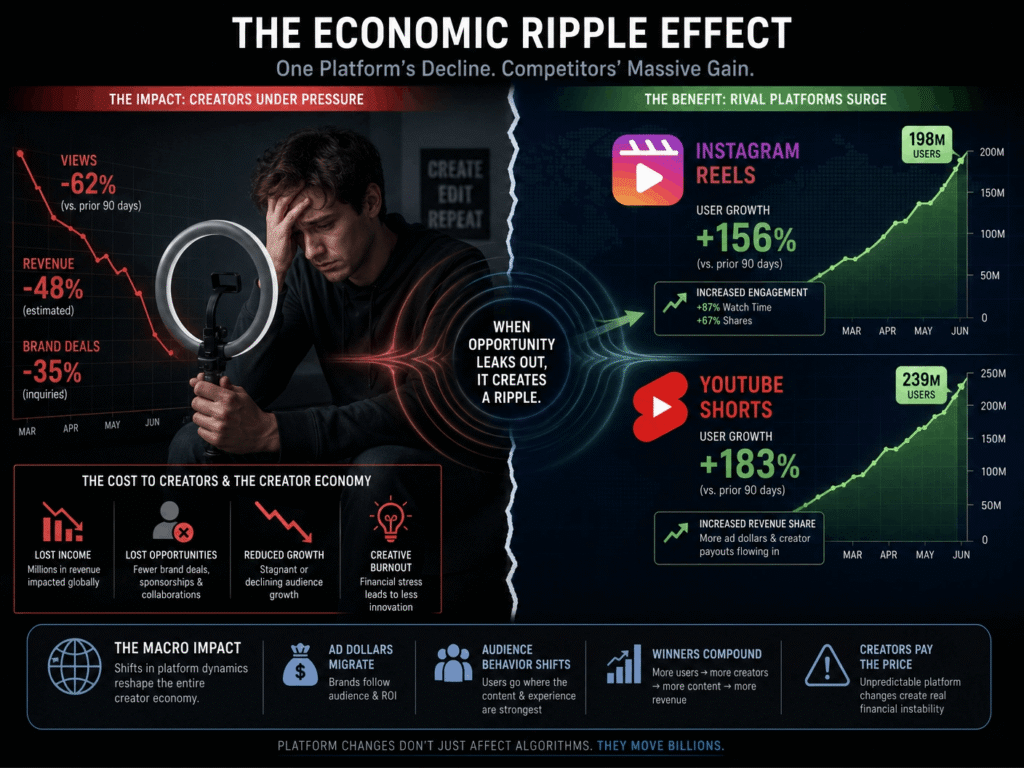
Creators panicked immediately. TikTok has made millionaires of thousands of ordinary Americans through its creator fund, brand deals, and live gifting system. Many had built their entire income on the platform. Within hours of the shutdown, creators were flooding Instagram, YouTube, and Snapchat with emergency migrations — posting their handles, begging followers to find them elsewhere, and watching their follower counts on competitor platforms surge.
Small businesses scrambled. An estimated 7 million small businesses in the US used TikTok as a primary or secondary sales channel through TikTok Shop, which had generated $100 million in single-day sales during peak periods. The 14-hour shutdown cost those businesses measurable revenue and exposed the risk of platform dependency.
Competitors moved fast. YouTube Shorts, Instagram Reels, and Snapchat Spotlight all reported record creator sign-ups during the 14-hour window. A new platform called RedNote — a Chinese social media app — briefly became the number one downloaded app in the US App Store as American TikTok users migrated there in what became an irony so perfect it went viral globally: Americans fleeing a Chinese app by downloading a different Chinese app.
Government attention intensified. Both Trump allies and Biden administration officials made competing statements. The legal ambiguity of Trump’s executive order — a president cannot unilaterally override a law passed by Congress — set up a constitutional conflict that, as of mid-2025, remains unresolved in the courts.
Part 3 — The Numbers: The Scale of the TikTok Ban 2025
The numbers behind the TikTok ban 2025 reveal how enormous the stakes are.
TikTok in the US:
- American monthly active users: 170 million
- Percentage of US adults who use TikTok: 51%
- US creator economy estimated annual earnings from TikTok: $24 billion
- Small businesses using TikTok for sales: 7 million
- TikTok Shop US gross merchandise value (2024): $9 billion
- TikTok’s US advertising revenue (2024): $11 billion
The ban’s immediate impact:
- Hours TikTok was down: approximately 14
- RedNote downloads during shutdown: 700,000+ in 24 hours (number one in App Store)
- Instagram Reels new creator sign-ups during shutdown: reported as the highest single-day total ever
- Estimated small business revenue lost during 14-hour shutdown: tens of millions of dollars
The legal situation:
- The Protecting Americans from Foreign Adversary Controlled Applications Act: signed April 2024
- Court challenges to the law: rejected by the Supreme Court unanimously in January 2025
- Trump executive order status: legally contested — a president cannot override a Congressional law by executive order
- ByteDance valuation: approximately $300 billion (private)
- Estimated sale price for TikTok US operations: $40–50 billion
The Supreme Court unanimously upheld the law in January 2025, confirming its constitutionality. The Supreme Court’s unanimous decision upholding the TikTok law is published in full on the Supreme Court’s official website and represents the clearest legal precedent on government authority over foreign-owned platforms. This means the ban is legally valid — but the executive branch’s decision not to enforce it has created a situation where an unconstitutional non-enforcement of a constitutional law exists in a legal gray zone that courts have not yet resolved.
Part 4 — The Aftermath: Where TikTok Stands in Mid-2025
The TikTok ban 2025 aftermath is one of the most unusual corporate and legal situations in modern American business history.
TikTok is currently operating in the United States in a state of legal limbo. The law banning it is valid. The Justice Department is not enforcing it by presidential instruction. No sale of TikTok’s US operations has been completed. ByteDance has not divested.
Negotiations for a potential sale have involved multiple reported suitors — including a consortium backed by Oracle, a bid from former Treasury Secretary Steven Mnuchin, and reported interest from several private equity firms. The sticking point is ByteDance’s algorithm — the recommendation engine that makes TikTok addictive and valuable. ByteDance has said it will not sell the algorithm. Without the algorithm, TikTok US is just a video app with a large but potentially temporary user base.
American creators have not fully recovered their confidence. Many now maintain active presences on multiple platforms simultaneously — TikTok, Instagram Reels, YouTube Shorts, and Snapchat — a strategy called “platform diversification” that did not exist as a mainstream creator practice before January 19, 2025.
TikTok’s advertising business in the US has been affected. Brands that paused advertising during the shutdown were slow to fully recommit. Several major brands restructured their social media budgets to reduce TikTok dependency regardless of the platform’s ongoing availability.
Pew Research Center’s Internet & Technology research confirms that platform diversification among creators accelerated significantly following the January 2025 shutdown event.
The broader question the TikTok ban 2025 raised — can a government ban a social media platform used by 170 million citizens, and what are the First Amendment implications — remains genuinely unresolved and is likely to reach the Supreme Court again in a different form.
Part 5 — The Transferable Lesson: What the TikTok Ban 2025 Teaches Every Creator and Business
The TikTok ban 2025 delivered the most important lesson in modern digital business in a single 14-hour window: you do not own your audience on a platform you do not control.
Every creator who built their business entirely on TikTok discovered overnight that their audience, their income, and their brand existed at the discretion of a platform subject to forces entirely outside their control — government regulation, geopolitical tension, corporate ownership structures, and app store policies.
The businesses and creators who navigated the crisis best were those who had already built owned channels — email lists, websites, YouTube channels — that no government action, corporate decision, or algorithm change could take away.
The TikTok ban 2025 is not primarily a story about TikTok. It is a story about the risk of platform dependency. And that risk applies equally to Instagram, YouTube, X, and every other platform every business and creator uses today.
Build what you own. Treat platforms as distribution, not as destinations.
Is TikTok banned in the USA in 2025?
TikTok is operating in the US in legal limbo as of mid-2025. A law requiring ByteDance to sell TikTok’s US operations or face a ban was upheld by the Supreme Court in January 2025. The app was briefly shut down for approximately 14 hours before the Trump administration announced it would not enforce the law while sale negotiations continued.
Why was TikTok banned in 2025?
TikTok faced a ban because Congress passed a law citing national security concerns about the Chinese parent company, ByteDance potentially being required under Chinese law to share American user data with the Chinese government. ByteDance was given a 270-day deadline to sell TikTok’s US operations. It did not complete a sale by the January 19, 2025, deadline.
Who might buy TikTok in 2025?
Multiple parties have been reported as potential buyers for TikTok’s US operations, including an Oracle-backed consortium, former Treasury Secretary Steven Mnuchin, and several private equity firms. The main obstacle is ByteDance’s refusal to sell the underlying recommendation algorithm that makes TikTok uniquely effective.
How many users does TikTok have in the USA?
TikTok had approximately 170 million monthly active users in the United States as of early 2025, representing roughly 51% of American adults. It is the third most-used social media platform in the US after YouTube and Facebook.
What happened to TikTok creators during the ban?
During the 14-hour shutdown, TikTok creators rapidly migrated to Instagram Reels, YouTube Shorts, and Snapchat. Many permanently adopted a multi-platform strategy after the event. Some creators reported significant anxiety and financial concern during the brief shutdown period, given their income dependency on the platform.
What is RedNote, and why did Americans download it?
RedNote (Xiaohongshu) is a Chinese social media platform similar to Instagram. American TikTok users downloaded it in large numbers during the January 2025 shutdown as a form of protest — the irony of fleeing a Chinese app by downloading a different Chinese app was widely noted. RedNote briefly became the number one downloaded app in the US App Store during the crisis.


I couldn\’t agree more! Your post is a valuable resource that I\’ll be sharing with others.
Thank you, for your kind words. I\’m committed to maintaining the quality of my posts.
I\’m so glad I found your site. Your posts are consistently excellent.